How-To Guides

Agency Retainer Model vs Subscription for Productized Agencies

Agency retainer model vs subscription, which one actually scales? Learn how modern productized agencies structure and choose the right model.

Peace Akinwale
Last updated: Apr 06, 2026
Try ManyRequests For Free
Table of contents

Key Takeaways

  • The agency retainer model creates predictable monthly revenue
  • Clear scope definition is critical to avoid scope creep
  • Retainers work best with ongoing services like design or marketing
  • Structured workflows improve delivery and client satisfaction
  • Using a client portal simplifies managing retainer requests

An agency retainer model is a recurring pricing structure where clients pay a fixed monthly fee for ongoing services, but the right model depends on how your agency delivers work, whether that's hourly, deliverable-based, or subscription-based. 

For most modern productized agencies, subscription-based retainers are the most scalable option. But getting there means understanding what each model demands operationally beyond how it looks on a pricing page. 

In this article, I explain the retainer pricing models and how to choose the best fit for your agency. 

The Agency Retainer Model Spectrum (From Least to Most Scalable) 

Model Scalability Best signal to use it
Hourly Low Variable, unpredictable client needs
Flat-rate Medium Repeatable, output-driven services
Subscription High High-volume, standardized work
Outcome-based High risk, high reward Trackable channels with proven processes
Hybrid Balanced Performance channels where attribution is clear

1. The Hourly Retainer (Time-Banked Retainer)

I’m sure you know agencies who bill hourly and how it works. But for an agency retainer pricing, the client pays a monthly fee upfront that buys a fixed number of hours. The agency then tracks time against that bucket of hours and delivers work until they've used what the client paid for. 

If the client needs more hours, they can top up at the standard rate. If they use less, the hours expire by the end of the month. And if you use ManyRequests as a client portal and PM tool, you can allow clients to roll over unused hours to the next month so they don't feel cheated paying for 20 hours when they used 15. 
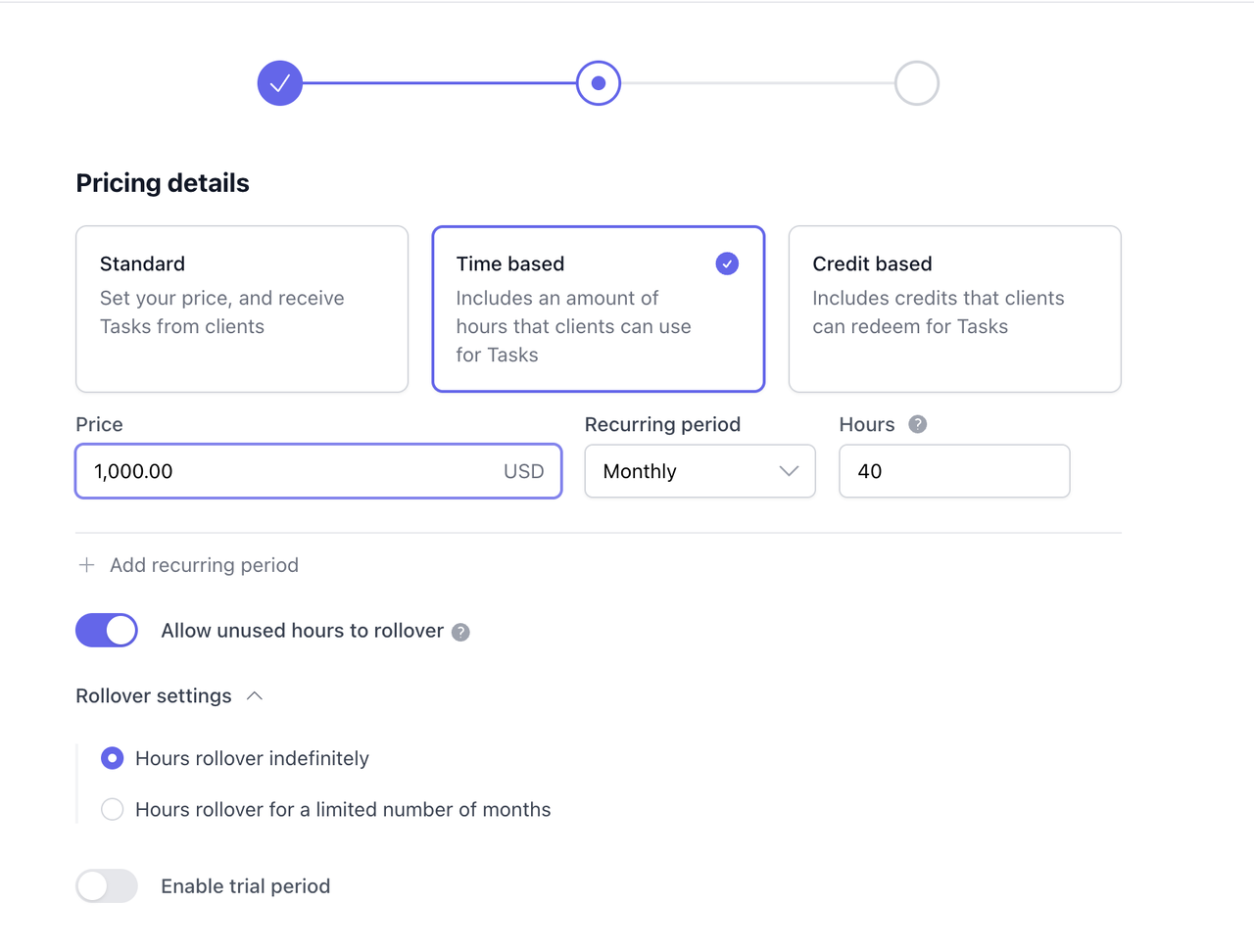
This must be stated in your contract btw, so they are aware of what they’re paying for. 

📌 Read more: Retainer Agreement Contract Template

Every work assigned eats up little hours, and you can use the time tracking feature in ManyRequests so they can know how their money was spent. You can also show them a weekly usage report. 
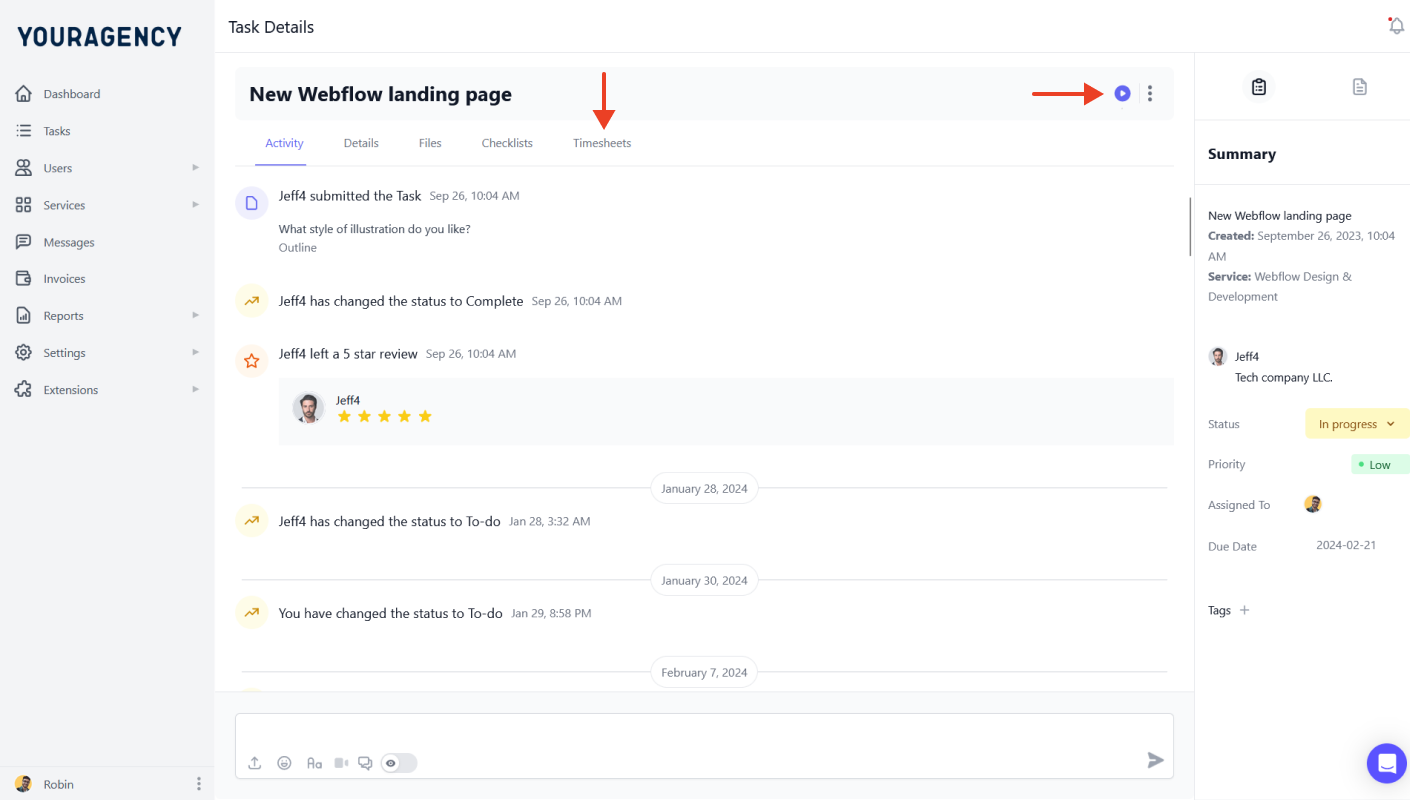
Hourly retainers work, but they penalize efficiency. The better your processes get, the less you earn per engagement unless you renegotiate rates. 

Best for: 

Consultancies, web dev shops, technical SEO agencies, and even design agencies. This is because if a client hires them for three months, their work for each month wouldn't be the same. 

For context, a web dev agency may spend five hours fixing a bug in January. In February, they may spend 40 hours adding a new feature to the client’s UI based on user feedback. 

What an hourly retainer agency needs to set it up 

  1. A time-tracking system that the agency and the client can see. This is to avoid disputes because clients can feel like you’re “spending” their hours on arbitrary tasks. With ManyRequests, you can add clients to a portal where they can see their project and time spent on each. 

This is the client view of your portal btw - here, they have access to the active projects and cannot see internal chats with your team. 
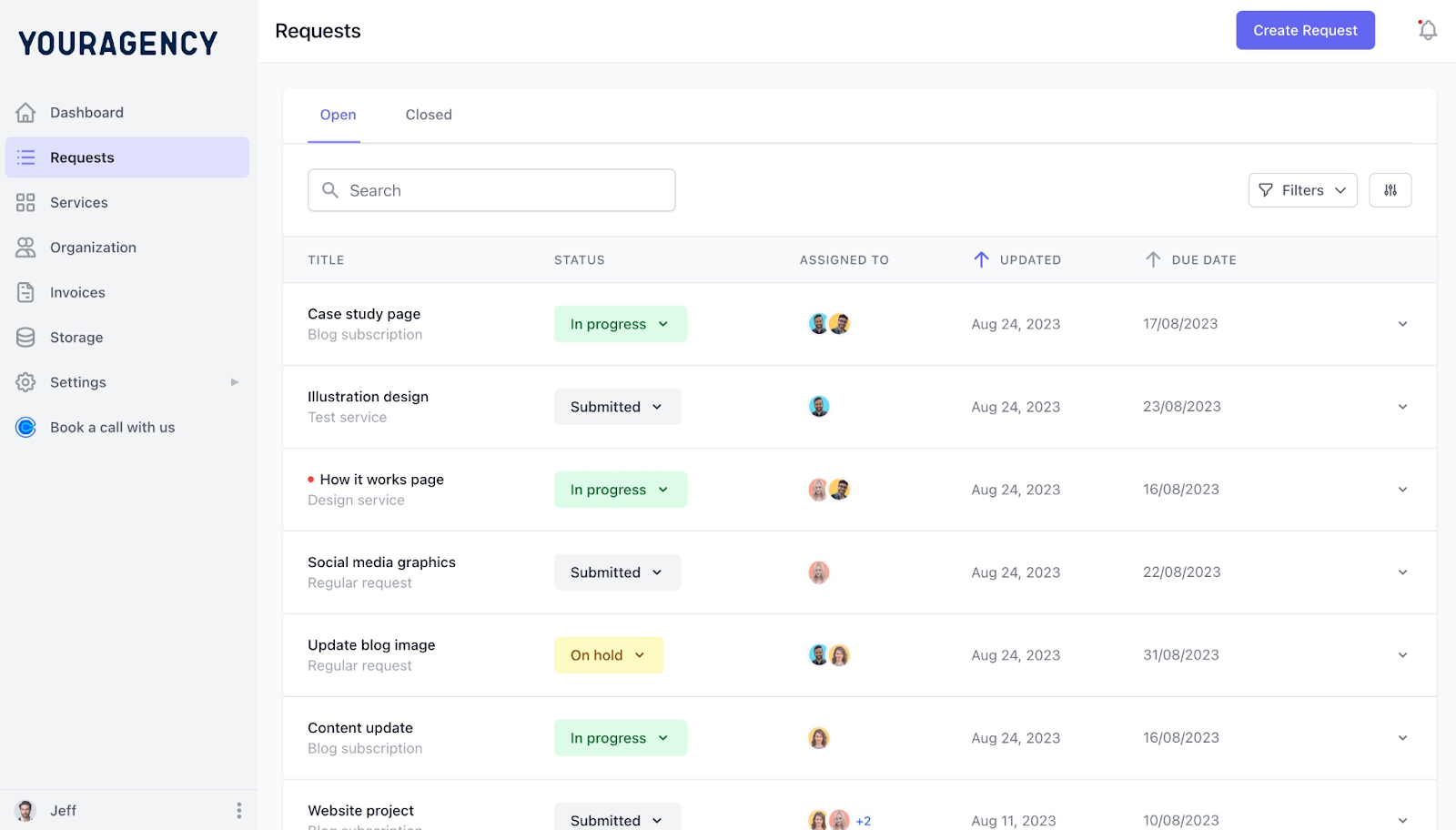
  1. A clear contract that specifies the tasks the hours they paid for cover, what the overage rate is (for extra hours), and what happens to unused hours (do they roll over? do they expire?).
  2. An end-of-month report that walks them through what you did and the time spent on them. Without this, clients can feel like they're paying into a black hole. 
  3. A clear approval workflow for any request that falls outside the agreed scope, so the agency isn't doing unpaid work and the client isn't blindsided by extra charges when you send the invoice. 

Cons 

  1. From the agency's side, there’s no reward for getting work done faster or building better processes. So if you’re able to complete a 10 hour task in six hours, you’ll bill for six hours. The better you get, the less you earn per engagement unless you renegotiate your rates. 
  2. From the client's side, they can feel like the clock is always ticking. They can start to second-guess every request and revision they ask for because they don’t want to engage you for more work than necessary, which can create a weird friction. 
  3. You’ll do a little more admin work than in other models. You have to track time, send usage reports, seek approval for overages, and resolve disputes regarding hours and pricing. As you scale, this can become problematic, which is why you need a client portal to handle the admin load

2. The Fixed-Scope Retainer (Flat-Rate)

In this pricing structure, the client pays a fixed monthly fee for a defined set of deliverables. If you’re a design agency, this can be $4,000 for 12 social media designs, 15 for email marketing, and 5 custom designs per blog article (5 articles per month). 

Flat-rate retainers are predictable, but they break down the moment a client starts pushing the scope. And that’s why a tight contract is important to getting an upside. 

Best for 

Content agencies, social media agencies, email marketing agencies, SEO link-building shops, and design agencies. This is because they have a specific number of deliverables per month, and the more repeatable the output, the easier it is to put a clear price on it. 

What a flat-rate retainer agency needs to set it up 

  • A scope of work document that is super specific about the deliverables. If it’s four sets of 1,000 - 1,500 words articles per month, this has to be clearly stated in the contract. If it is five social media designs, two carousels of at most 10 pages each, it must be stated as well. 
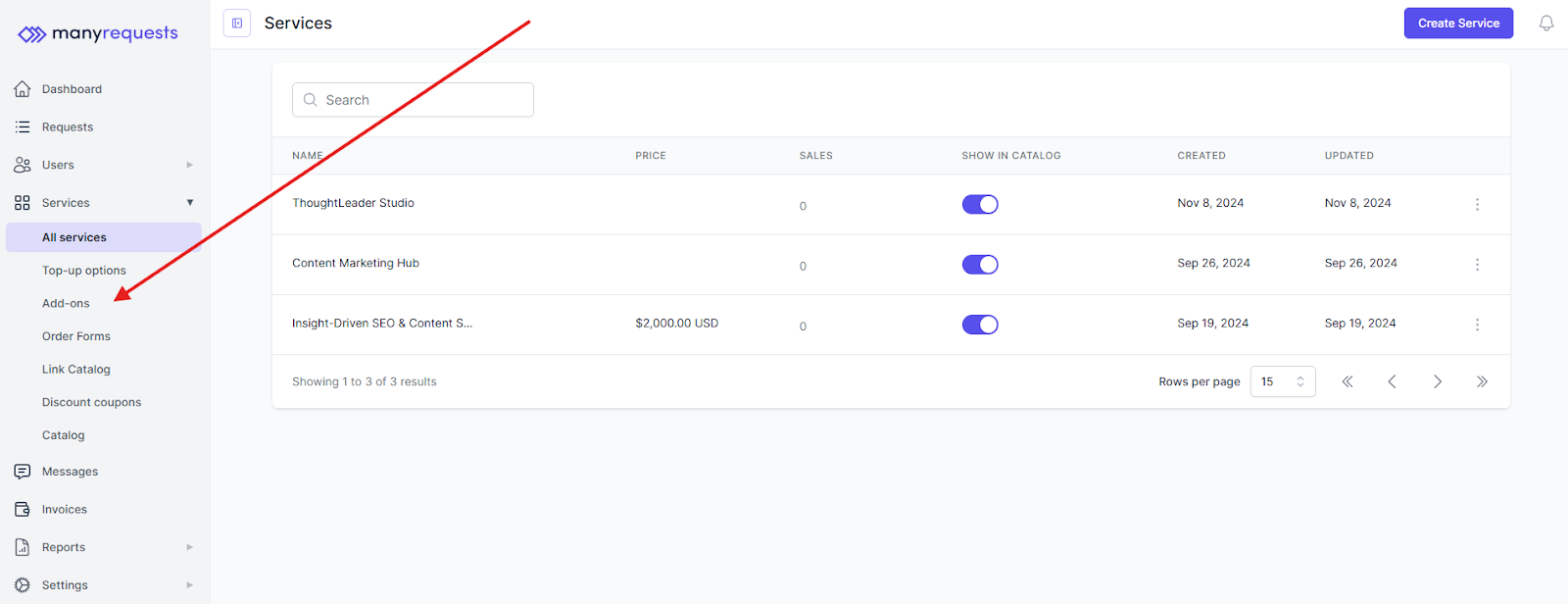
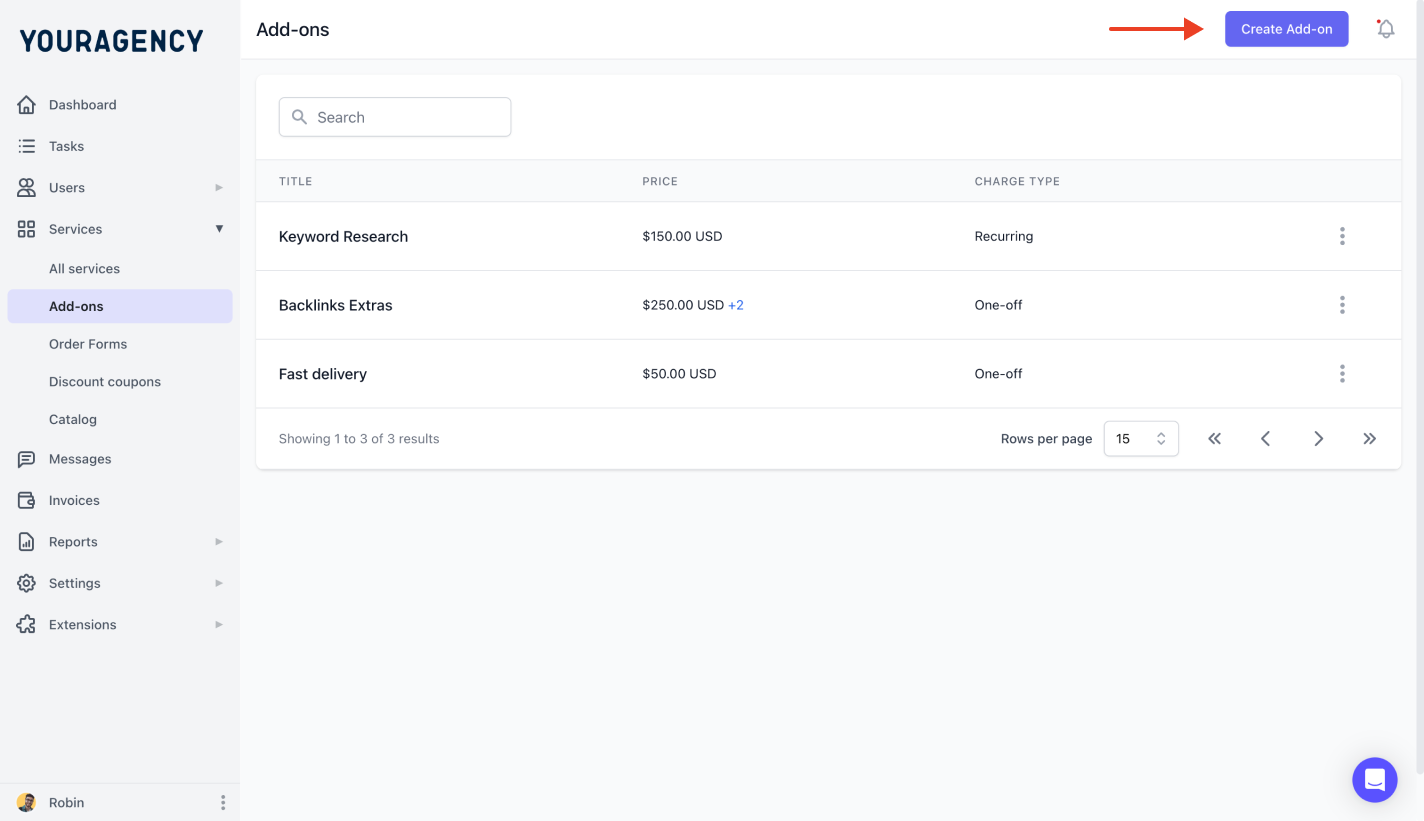
  • Add an out-of-scope clause for every request that you're not responsible for. For example, as a content agency, if your retainer doesn’t include keyword research, write it here. But if you provide the service, you can add a clause that it can be provided as an add-on at xyz dollar amount. 

You can create this add-on services for clients in ManyRequests: 
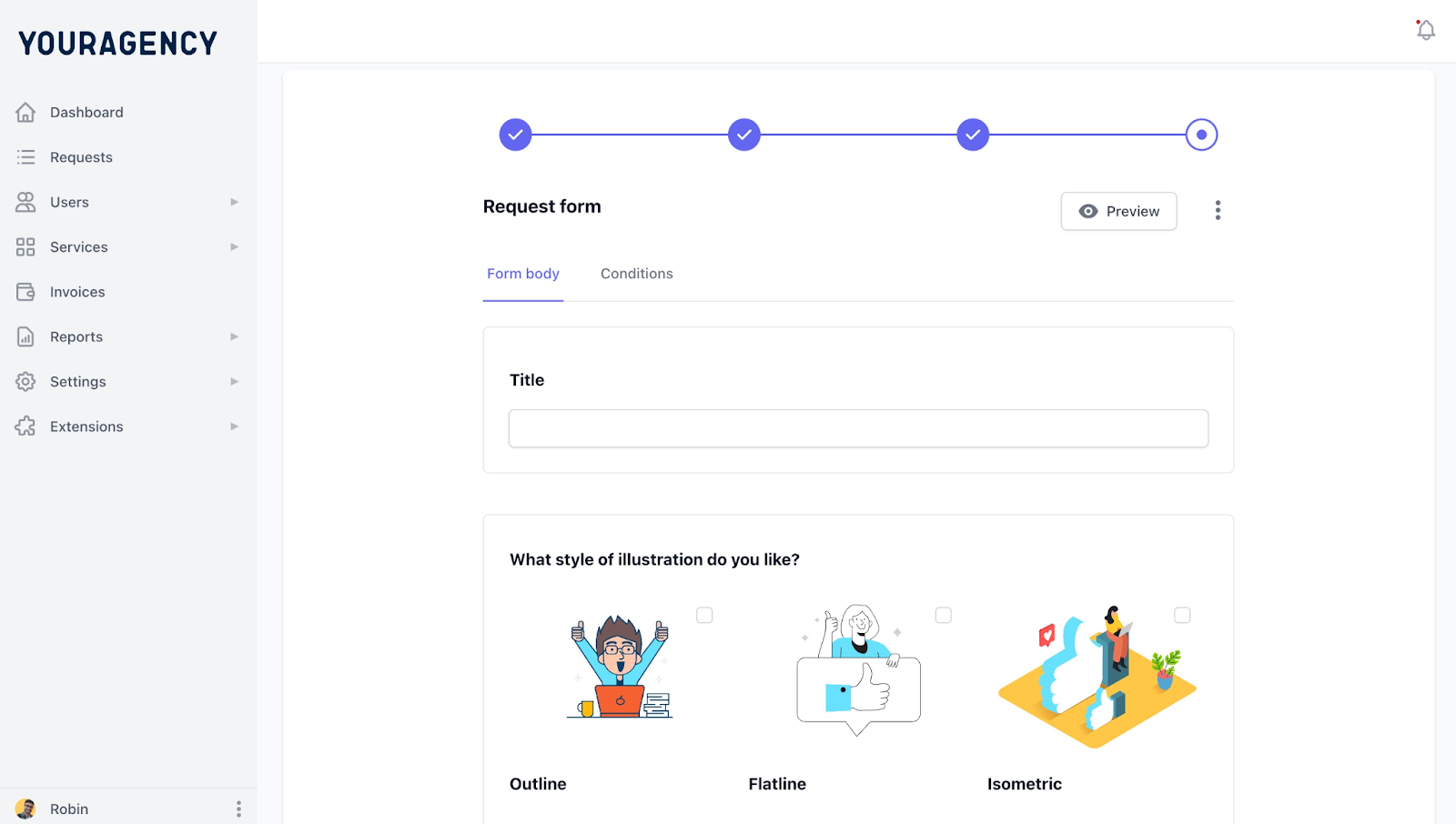
  • An intake form so clients can easily request for a new deliverable. Intake forms help you properly collect all the details you need upfront to avoid chasing them for more context later. 

With ManyRequests, you can create a well-thought out intake form. Whenever they wanna book your service, they’ll see the form and fill it with the details you need for their work. 
Cons 

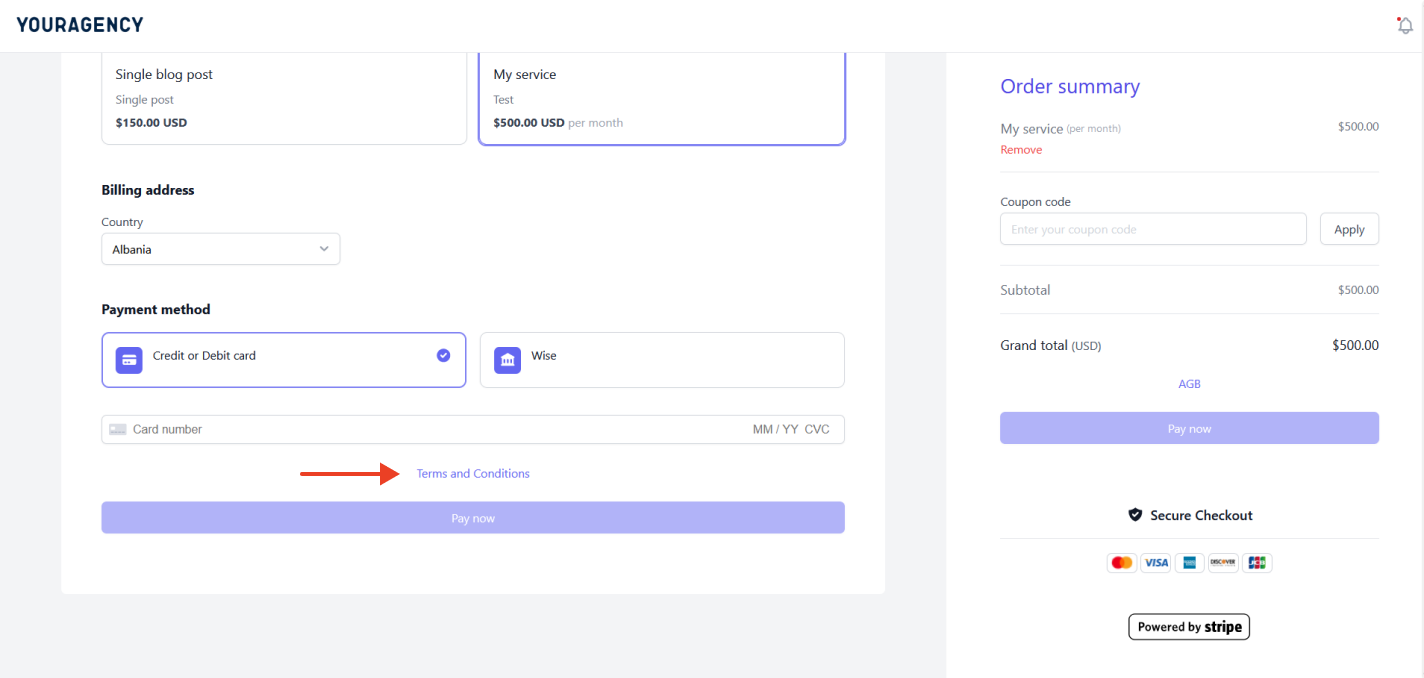
  1. Scope creep. But you can avoid this with a standard retainer agreement contract. You can also write detailed service descriptions and terms and conditions in the checkout page if you’re using software like ManyRequests. 

This lets you add terms and conditions to your checkout form, so clients understand what they're paying for: 
  1. There’s also the profit angle if a deliverable requires more effort than usual. For example, if two out of the eight articles you’re assigned require more research, more time, you won’t be compensated for that extra time because you billed a flat price every month. Same way the client doesn't pay you less if an article was easier to write. 

3. The Request-Based Subscription Retainer

In this subscription-based model, the client pays a fixed monthly fee and makes requests through a structured intake system. 

The agency processes those requests in a queue and submits one task at a time. This is the playbook that an agency like magier uses: 
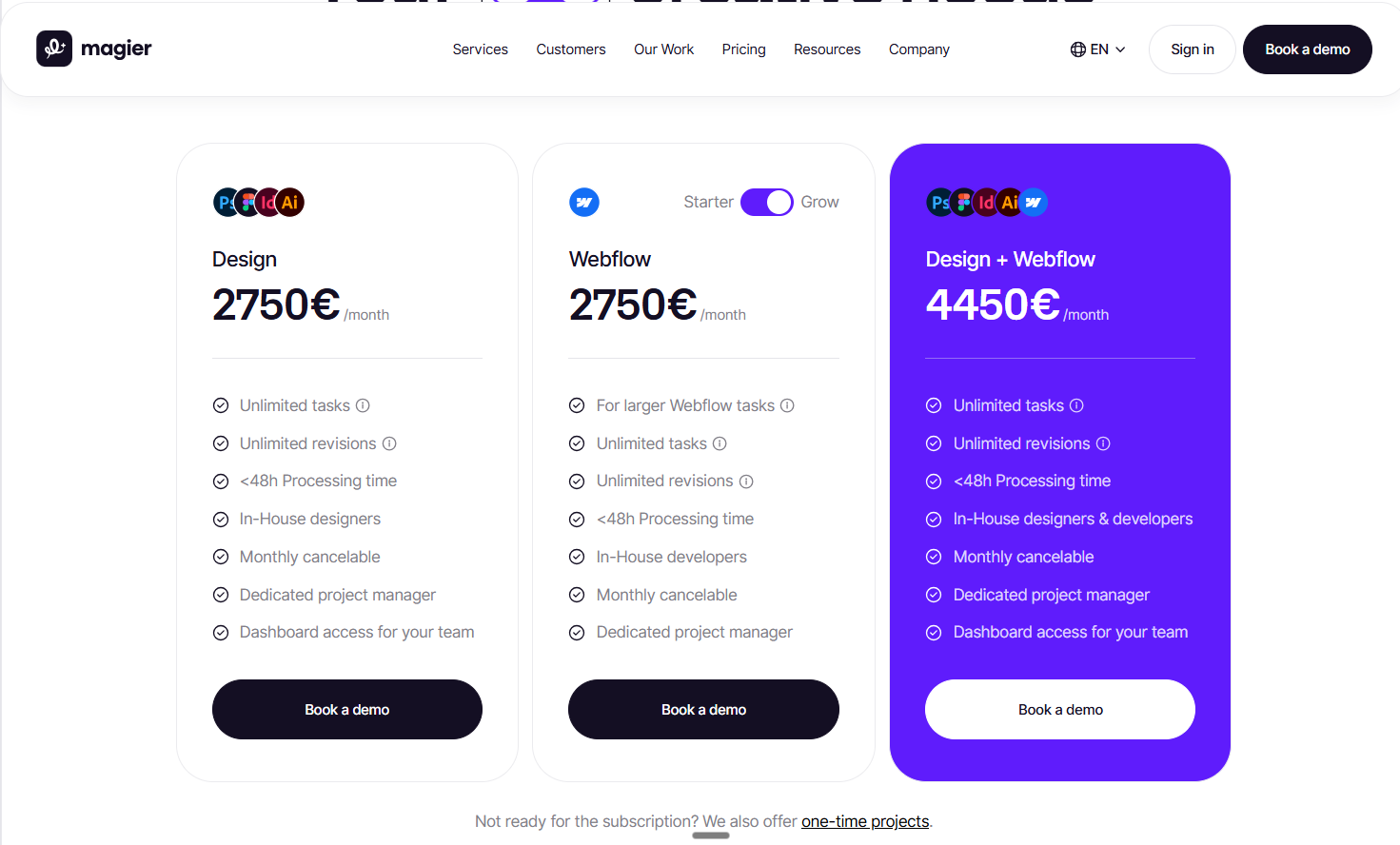
The scope of work here is defined by the types of requests the subscription covers and the pace at which the agency delivers them. 

As you can see from magier’s pricing page, they allow unlimited tasks and revisions, but each work takes about 48 hours of processing time. This means any other task within that 48 hour window won’t be handled until they submit the active task. 

Most agencies start with hourly or flat-rate retainers, but as they grow, they shift toward subscription-based models because they’re easier to standardize and scale. Of the five models, subscription retainers are what most productized agencies are using because the queue handles pacing, the intake form handles briefing, and clients always know where their work stands. 

Best for 

Design agencies, video editing agencies, web dev agencies handling small-ticket tasks, and copywriting agencies. This is because they do the same type of work at high volume and can handle it through a structured queue. 

What the subscription-based retainer agency needs to set it up

  1. A well-built intake form that forces the client to provide everything you need upfront. You can use Google Form, Typeform or even Google Docs to collect this. 

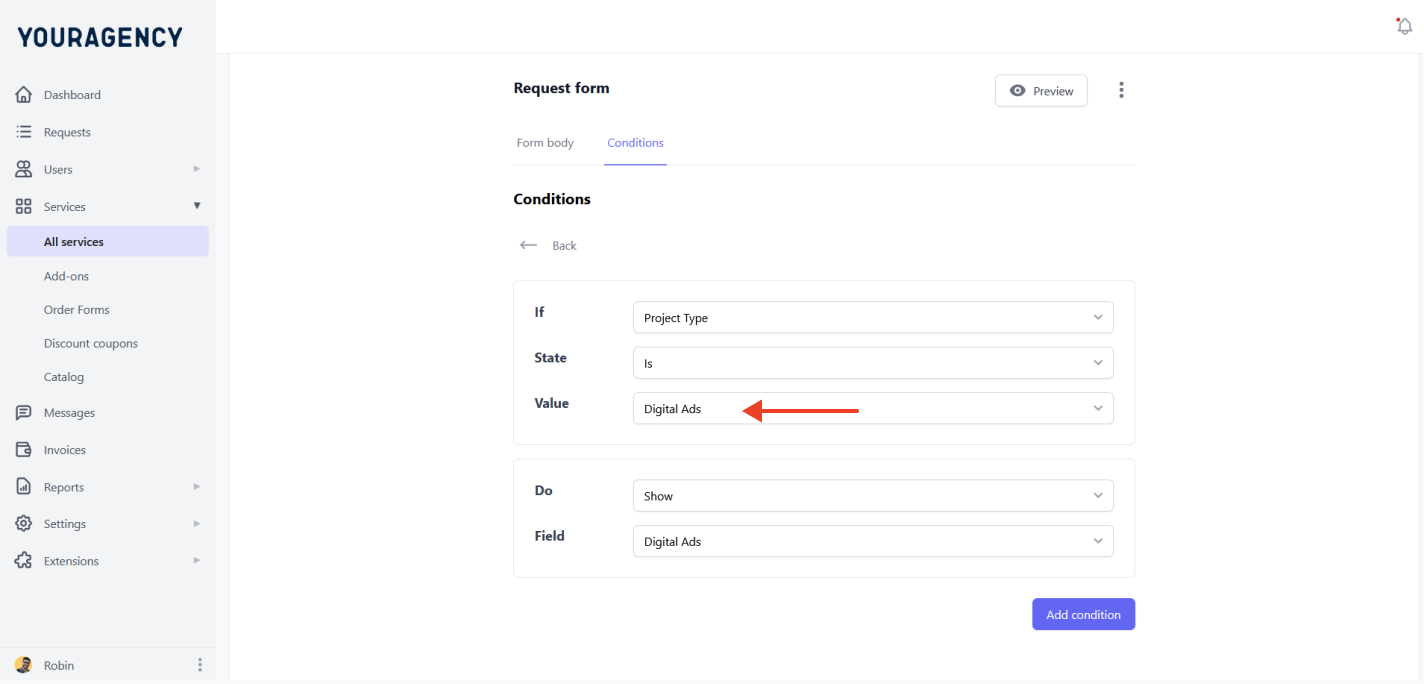
But if you’d like to keep the forms in the same dashboard where you manage client projects, use ManyRequests. You can customize the form fields and even add conditional logic, such that if a project type includes digital ads, print materials, and logo & identity, the questions they are asked vary based on the answer they choose: 
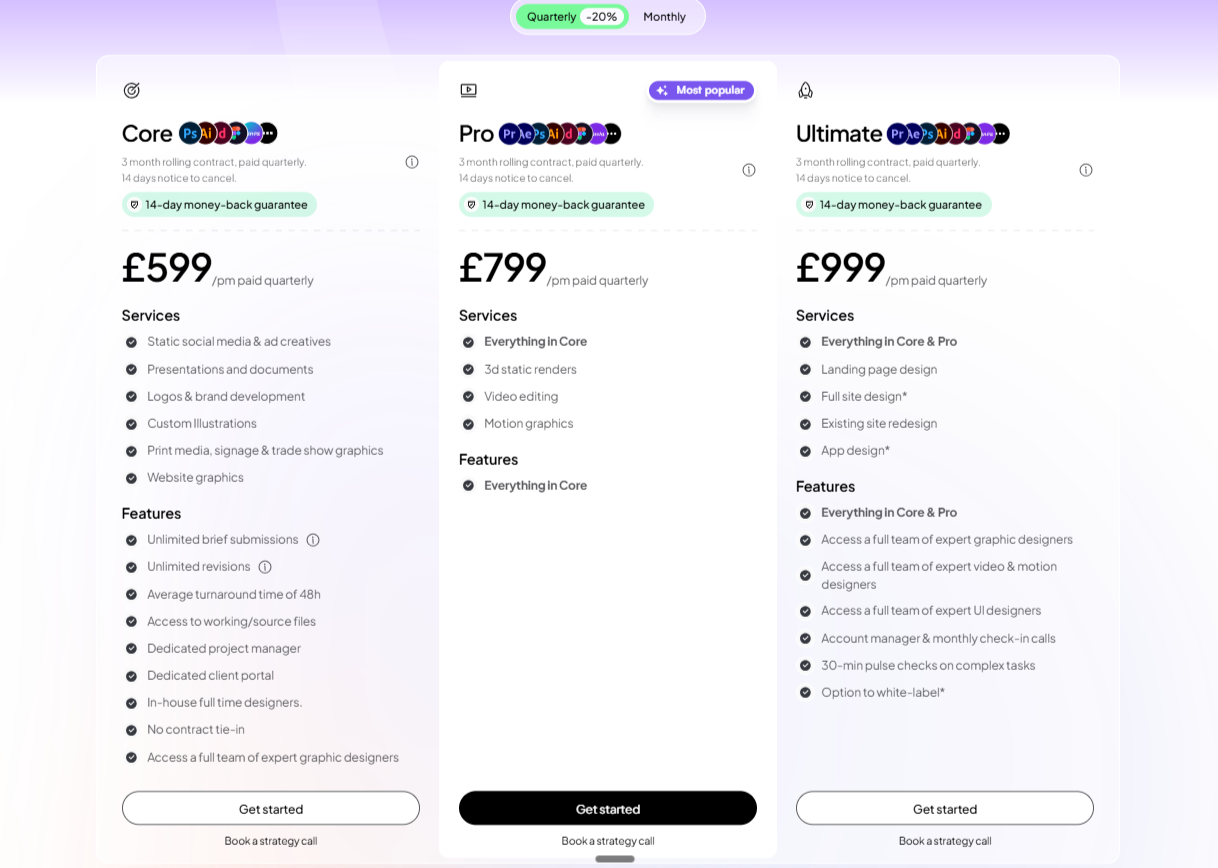
  1. You need to be explicit about the type of work the subscription covers and what it doesn't. An example of an agency with this level of specificity is DesignGuru. Their core plan doesn't cover 3D renders but their pro plan does, and they made it clear: 
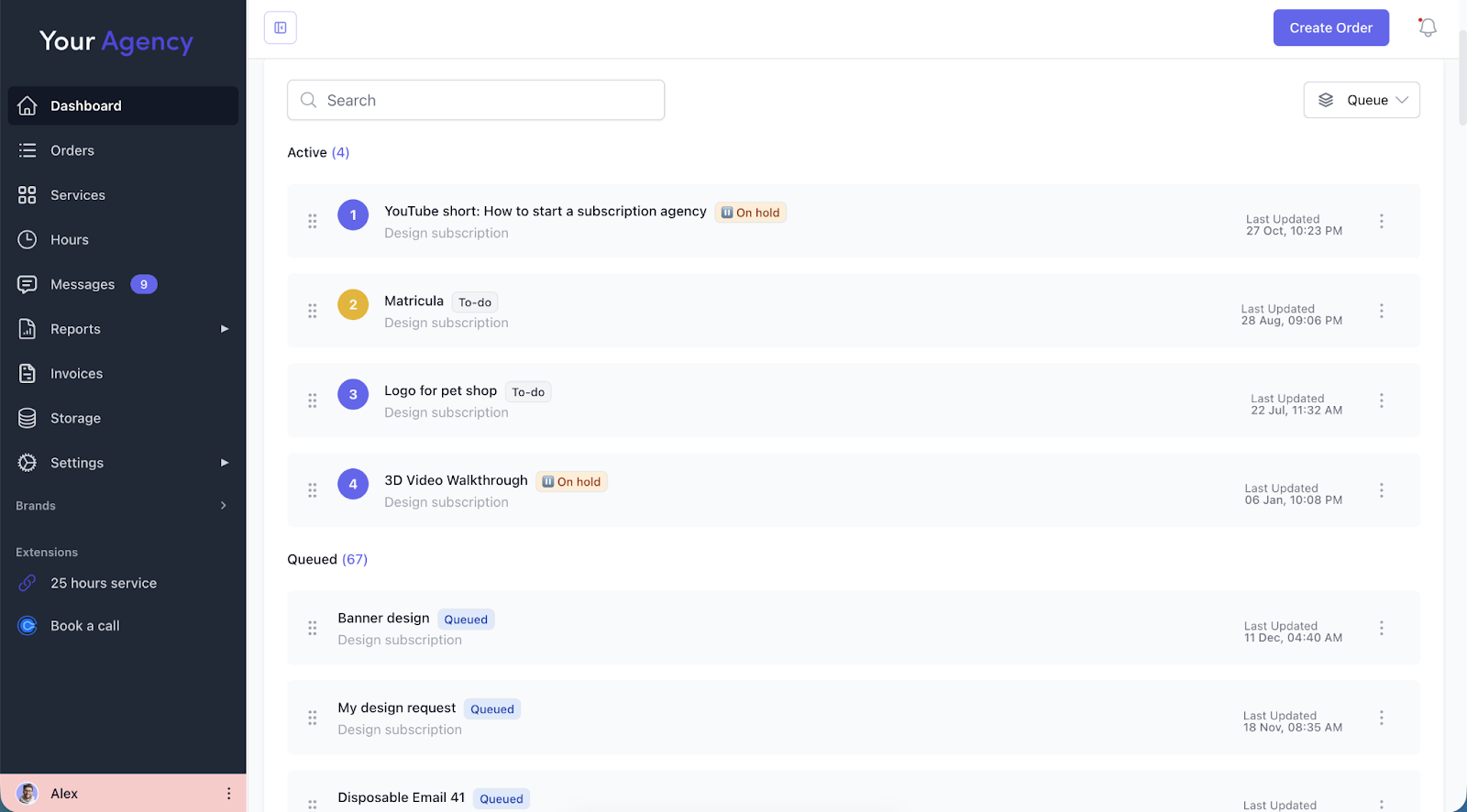
  1. Keep a transparent queue so clients always know their completed tasks and the ones on hold. This way, you won’t spend time having to manually update them of the tasks you’re working on and the ones on the “queue.” 

You can also use the ManyRequests client portal to show them. This is the client view when they have multiple tasks and some are on the queue, so they don't have to ask for updates: 
  1. A revision policy. Two rounds per request within xyz hours after submitting the initial draft is a good compromise for your agency. 
  2. Have a communication rhythm with the client. This can be biweekly check-ins or monthly summaries of what was delivered. 

Cons 

  • Clients who submit complex, multi-part requests that technically fall within the subscription category but take more time. They’re not billed by the hour, so it doesn’t matter how much time it takes. As a subscription-based retainer agency, you’re like an extension of their in-house team. 
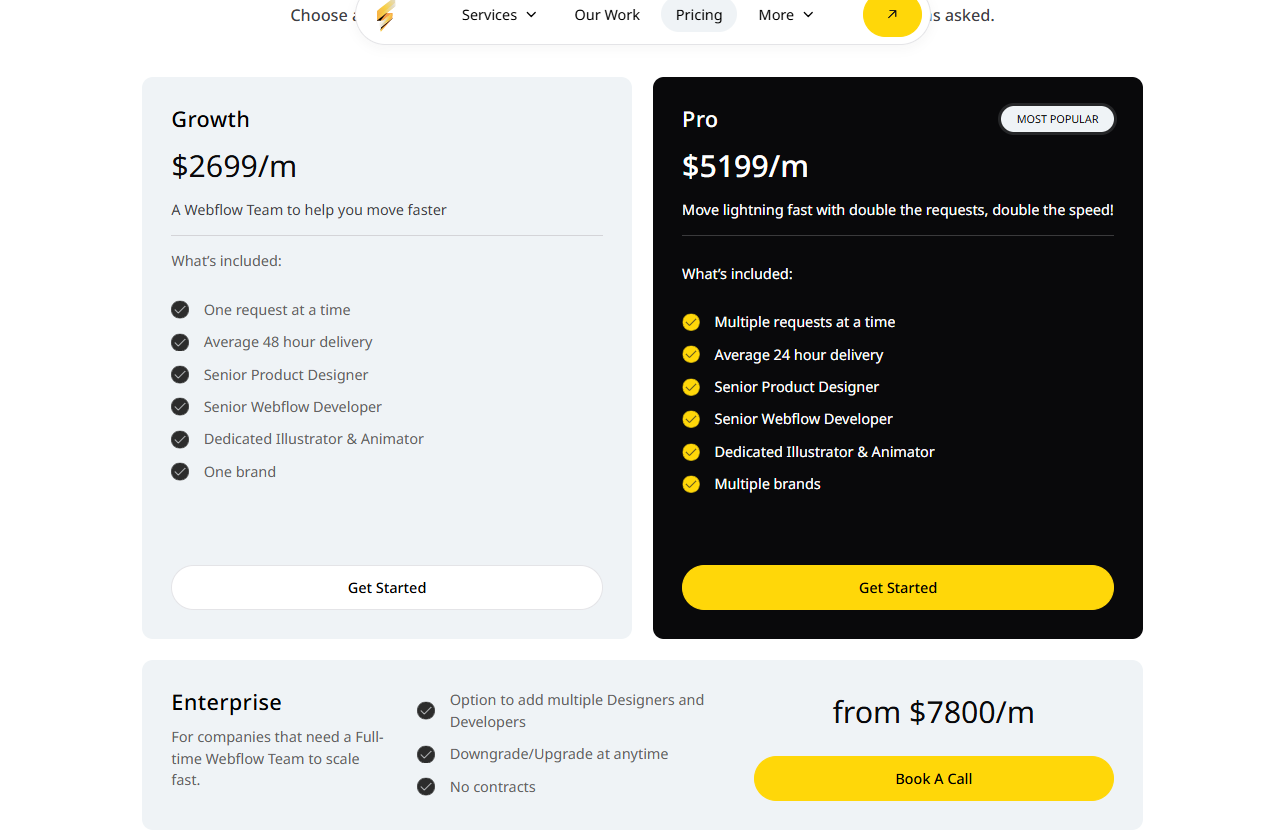
  • Allowing "unlimited requests" can attract clients with high-volume requests who can quickly burn out your team without the revenue to justify it. However, you can bill in a way that protects your margins. For example, Flowspark, a webflow dev agency, bills relatively high so they always have reasonable profit margins even for the most demanding client. 
  • Lastly, clients who don't submit enough requests in a given month may feel like they've wasted money. You would have to address that and let them know that you’d be available when they need you the most. 

4. The Outcome-Based Retainer (Value-Based)

Here, your agency commits to a business outcome rather than a set of deliverables or a block of hours. The monthly fee is tied to results (lead gen, traffic, conversion rate improvement, etc.). 

So instead of saying "we'll publish six articles and run two paid campaigns per month," you say something along the lines of "we'll generate 150 qualified leads per month." Basically, the client is paying for the results you promise; they don’t care what it takes to get them. 

This is a high-risk, high-reward model. It only works if your process is already proven and repeatable. 

Best for 

This is best for experienced agency owners with a proven, repeatable process. It’s also great for niches where outcomes are directly attributed to the agency's work (think SEO, link building, lead-gen, paid media, etc.). 

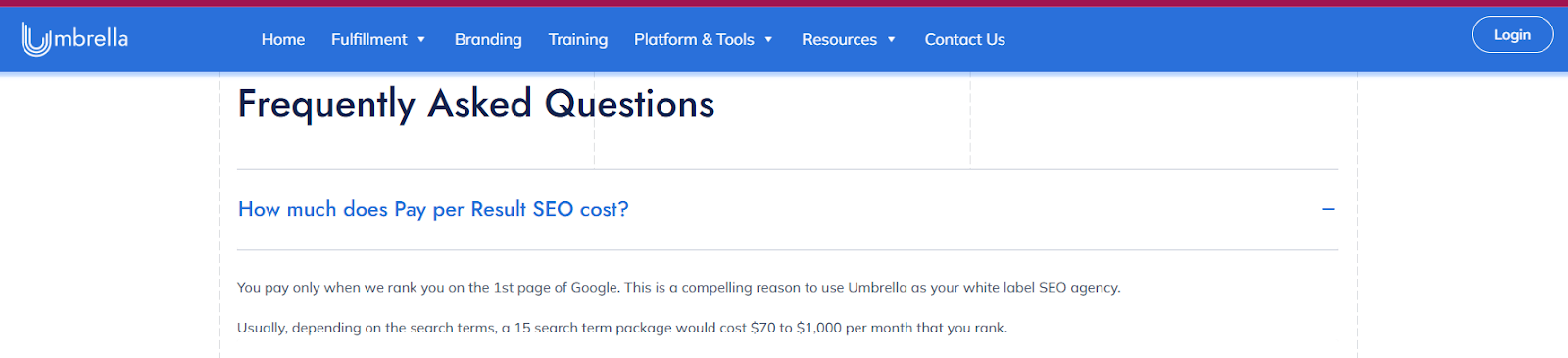
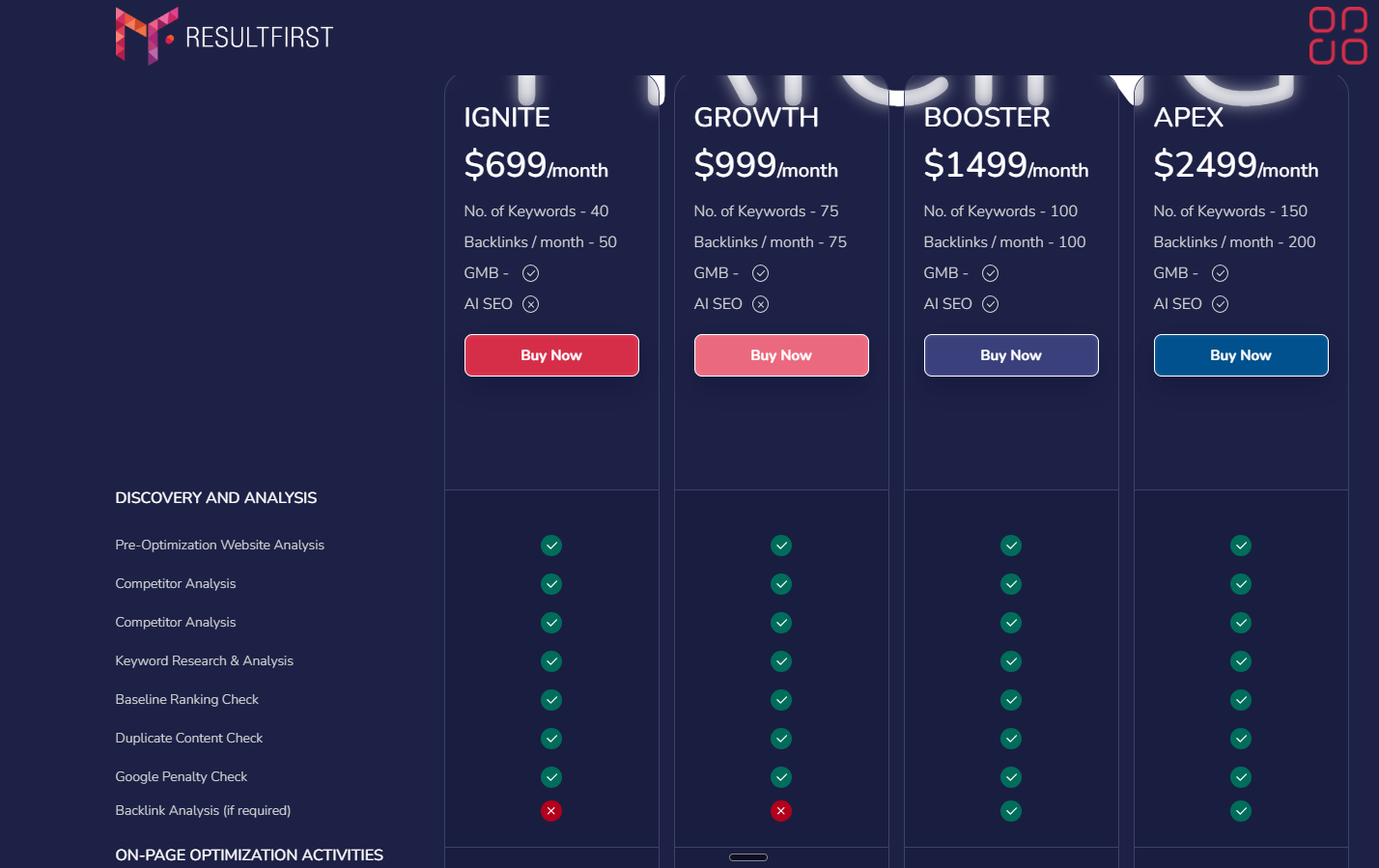
For example, ResultFirst’s pricing is structured in a way that clients only pay when they rank for a specific number of keywords. The base payment is $699/month for 40 keywords and max is $2,499/month for 150 keywords. 
Same for Umbrella Marketing

What the outcome-based retainer agency needs to set it up

  1. A thorough baseline audit before you start work. You need to know where the client is in terms of traffic, conversion rates, lead volume, and revenue (and whatever you’re promising) before committing to where they'll be next month or six months. Without this, the outcome target is arbitrary and you can’t properly measure your efforts. 
  2. A contract that defines the outcome precisely, specifies how you measure outcomes, and outlines what happens if external factors affect results. This can be budget cuts, retired product features, etc. 
  3. A reporting cadence that shows progress monthly. This way, clients have a feel of your work before the eventual success you promised. 
  4. A strong client qualification process. Outcome-based retainers only work with clients who are willing to delegate execution completely. Clients who want to approve every piece of content, redirect strategy mid-month, and override your recommendations will undermine the outcome without realizing it. So screen for this from the get-go. 

Cons 

  1. Factors like algorithm updates (for a content agency) or Google clamping down on link-building tactics (for a link-building agency) can affect your outcome because they’ll undermine the quality of your work. 
  2. Attributing outcomes to your work alone is genuinely difficult when the client has multiple marketing channels, a sales team, or engages in other marketing activities. 
  3. You can also easily underprice the commitment. If you have to send 100 cold emails for 15 qualified leads, you may undermine the efforts required to make this work. And this may affect your commitment in the long-term and lead to burn out. 
  4. The model creates pressure to show results on a timeline that doesn't always match how long the underlying work actually takes. For example, SEO takes at least three to six months before you start to see results. So if you promise outcomes within three months, what if it takes six months or more? 

5. The Hybrid/Performance Retainer

In the hybrid agency retainer model, the client pays a base monthly retainer that covers your core work, combined with performance bonuses tied to results. The base covers the costs of your work and the bonus on the side is an upside for both parties when you exceed expectations. 

For example, a paid media agency can charge $4,000 per month as a base fee to manage ad campaigns. But they also get a $500 bonus for every 25% increase in qualified leads above the agreed baseline. 

So if the client's baseline is 100 qualified leads per month and the agency gets 150, they get a bonus. 

The hybrid model gives you stable base revenue with performance upside. The catch is that both parties have to agree on attribution before work starts, or the bonus structure creates conflict instead of incentive. 

Best for 

Pay-per-performance marketing agencies, lead generation agencies, paid social agencies, link-building agencies, e-commerce growth agencies, and cold outreach agencies. It’s a fit for agencies working in channels where their contribution to results is traceable. 

What the hybrid/performance retainer agency needs to set it up

  1. A baseline documentation session before you start working for the client. You and the client need to agree on their current performance across every relevant metric. Since the bonus is calculated against this baseline, if it isn't defined before you start work, it can lead to conflict later. 
  2. An airtight attribution model. If the bonus is tied to revenue or leads, both parties need to agree upfront on how to measure it. 
  3. A base fee that genuinely covers your labor costs (with probably a little upside). Agencies that underprice the base in pursuit of attractive bonuses end up working at a loss in slower months. Your base fee needs to cover the full cost of running the account plus a minimum acceptable margin. The bonus is just an incentive for work well done. 

Cons 

  1. You are at risk of having disputes over attribution, which is why everything has to be well spelled out from the get-go. 
  2. Inconsistent revenue for your agency, especially if there are many underperforming months. This is why you should have a minimum acceptable margin in your base price while negotiating the base pay for your work. 
  3. Clients who push for aggressive thresholds to maximize value can lead to burnout or overwork without extra base compensation. It can even make the work environment more toxic for you. 

Most retainer models don't fail because of pricing. They fail because the delivery system breaks down — requests go missing, billing is disconnected from the actual work, clients lose visibility into what's happening, and communication becomes reactive. 

ManyRequests is built specifically for this layer. It connects request intake, queue management, time tracking, billing, and client visibility into one place so the operational side of your retainer doesn't become the reason it breaks. See this seven minutes clip for how our software helps: 

Lastly, Use Add-Ons Where It Fits

While every retainer model has its defined scope, there are times when a client needs more work than their retainer covers. This is when you can have add-on services either upsell or to complement your work. 

For solo operators especially, add-ons help you avoid extra work that erodes your structured pricing rates. 

To keep it structured, do these: 

  1. Mention that if they need other services outside the retainer, it will be billed at a standard rate. You can insert your service link (or add-on links) to these services so they know the price. To do that…,
  2. Build your add-on into a service catalog. If you know your clients will need specific services in advance, you can build this add-on into your client portal or pricing page. 

For example, as a content agency, your client may want to write a case study or an industry research report. If you offer similar services, you can structure it as an add-on rather than part of their retainer. 

With ManyRequests, you can create as many add-ons as you need, each with their pricing (hourly or per project), and service intake forms. 
  1. Make the path to buying it clear. It’s easier with ManyRequests as clients can see a list of your service in a single portal and even pay for it right away (through Stripe). 

But if you’re not using ManyRequests, find ways to make paying for the add-on easier, and this could mean writing an invoice so they can pay it later. Whatever works for you. 

How to Move Existing Clients from Project Work to a Retainer

If you still have clients who pay per project and can benefit more from a retainer, you can use a straightforward pitch like: 

"Hey (client), we've been working together for a while now and we'd love to put you on a monthly retainer. You'll benefit from a discount on our rates, and we benefit from having you as an ongoing client. You can cancel any time within 30 days’ notice. Is this something you'd be open to?" 

This pitch can help because it goes straight to the point and lets the client know it’s a win-win idea. 

Another hard part of this transition could also be the part where clients have to submit work through a “new” client portal (if you’re using ManyRequests, ClickUp, etc.). The best you can do is to walk them through the intake form on a call, show them the queue view, and let them see how you mark tasks as complete. 

Which clients should you pitch for a retainer? 

The clients who are best to pitch are ones who are already happy with your work. They know what working with you is like and don't need to be convinced that you can deliver. 

The only thing you should do before the pitch is to choose a retainer model and have a detailed offering laid out.

Here’s a side-by-side comparison of all agency retainer models based on how they operate in practice:

Model Best for Pricing structure Intake requirement Solo operator friendly? Average team size
Hourly retainer Variable, hard-to-package services Monthly fee for a block of hours Scope + approval workflow Yes, but with high admin work 1-5+
Flat-rate retainer Repeatable, output-driven services Fixed fee for specific deliverables Detailed scope doc + out-of-scope clause Best starting point 1-15+
Request-based subscription High-volume, standardized output Fixed fee for queue-base sub service Structured intake form Yes 1-25+
Outcome-based retainer Proven processes with trackable results Fixed fee tied to a specific result Baseline audit + attribution agreement Risky to scale without a partner or a team 5+
Hybrid/performance based Performance channels with measurable ROI Base fee + bonus above a defined threshold Baseline documentation + attribution model Not recommended 5+

How to choose an agency retainer model 

The agency retainer pricing structure you choose determines how you scope your work, handle overages, and how clients experience working with you. Here’s a thought process to consider before choosing any: 

  • If you're just starting out, flat-rate retainers are the easiest to sell and manage. 
  • If you're handling multiple clients at scale, a subscription model gives you more structure. 
  • If your process is proven, explore outcome-based pricing. But only if you can control execution completely and have the attribution model to back it up.
  • If you work in a trackable performance channel, the hybrid model gives you a stable base with upside. 
  • If your work varies significantly month to month, hourly is still the most honest model. Just know it won't scale without heavy admin support.

Frequently Asked Questions

1. What is an agency retainer model? 

A recurring pricing structure where clients pay a fixed monthly fee for ongoing services — hourly, deliverable-based, or subscription-driven.

2. Which retainer model is most scalable? 

Subscription-based retainers. They're the easiest to standardize and operationalize as your agency grows.

3. What's the difference between a flat-rate and subscription retainer? 

Flat-rate defines specific deliverables per month. Subscription defines the type of work and processes it through a queue — volume is less fixed.

4. When should you avoid outcome-based pricing? 

If your process isn't yet proven and repeatable, or if the client isn't willing to fully delegate execution.

5. What tools do you need to run a retainer successfully? 

At minimum: an intake form, a way to track and report work, and a client portal that gives visibility without manual updates.

What should I do now?

1. See how ManyRequests works in real life. Start a free trial and experience how productized agencies centralize requests, reduce chaos, and streamline delivery, without changing their entire workflow.

2. Read our Implementation Guide to launch smoothly with your team and clients.

3. Follow us on LinkedIn and YouTube for practical agency growth strategies

Peace Akinwale

Peace Akinwale is a B2B SaaS content writer and strategist who creates BOFU content and how-to articles that drive measurable growth for software companies and agencies. Over six years, he's worked with clients like Marker.io, Pangea.ai, Spicy Margarita agency, and HigherVisibility to turn technical topics into content that converts, and has helped a client achieve 233% organic traffic growth within six months of taking over their blog.

Simplify Your Creative Project Management

Manage projects, clients, feedback, and billing in one branded portal.
No credit card needed.

Running an agency?

ManyRequests is a client portal & requests management app for creative services.
Learn More

Get the ManyRequests Implementation guide

Download Now

Continue Reading

Tools & Comparisons

We Evaluated the 7 Top Choices for the Best Client Collaboration Tool in 2026

Compare the best client collaboration tool options for agencies in 2026 and see which platform actually supports real client workflows.
Read more
Tools & Comparisons

Top 5 Design Approval Software for Creative Agencies in 2026

Discover the best design approval software for creative teams managing revisions, feedback, and approvals.
Read more
Tools & Comparisons

6 Best Project Management Software for Designers in 2026

Explore how project management software for designers supports client feedback, revisions, and smoother creative workflows.
Read more
Tools & Comparisons

Client Reporting Software for Creative Agencies: A Complete Guide (2026)

Discover client reporting software designed for agencies that want clarity, transparency, and fewer status calls.
Read more
Tools & Comparisons

Jira vs ClickUp for Creative Agencies in 2026

Comparing Jira vs ClickUp? Here’s how each tool performs for creative agency workflows and client projects.
Read more
Tools & Comparisons

Notion vs Airtable for Creative Agency Operations in 2026

Notion vs Airtable compared for creative agencies. See what works, what breaks, and what scales with clients.
Read more

Switch in days, not weeks.

14-day free trial
No card required
Free Full Migration Support
Live Chat & Email Guidance