Free UX Proposal Template [Docs / DOCX]
Many UX agencies lose retainer work and never figure out why. The design was good, and the client seemed happy. Then the engagement ended. No renewal, no explanation. The UX proposal template is usually where it went wrong. It read like a project quote, so the client treated it like one.
If your agency sells ongoing UX work, whether that is monthly sprints, regular audits, or a full UX retainer, this guide is for you. Download the free template and keep reading for a section-by-section breakdown of how to write one that gets signed.
What is a UX proposal?
It is a document that lays out how you plan to improve the experience of a digital product. It identifies what is not working for users, what needs to change, and how your team will get there.
For retainer-based agencies, it also sets up how the ongoing work runs: how problems get flagged, how sprints work, how billing flows, and what the client can expect over time.
Most UX proposals stop at the project. The client has ongoing UX problems. You are the team that keeps solving them.
How a UX retainer proposal is different from a project proposal
Removing the end date does not turn a project proposal into a retainer proposal. The whole document needs to change.
Project scope is a list of screens. The retainer scope is a monthly rhythm. Project billing hits when something gets delivered. Retainer billing hits on the same date every month, whether the client sent five requests or none. And if you do not write renewal terms into the proposal, the client decides when it ends. Most of the time, they decide quietly.
Quick check before you send: Does your proposal have phases? If it does, you wrote a project proposal. Phases end. Retainers do not.
How creative agencies write UX proposals that close retainers
Here is what each section of your proposal needs to do.
Get the brief right before you start
Before you write a single section, find out what the UX problem is actually costing the client each month. That number is where your proposal starts.
DesignGuru onboards every client with over 200 structured brief types with conditional logic built in. They completed 1,500 projects in under a year, earning a 4.92/5 rating. Good results need good information.
The answers your client gives you on the discovery call are the first thing that goes into the proposal, not your process, not your portfolio.
Scope it around cadence, not deliverables
The moment you write "5 screens" in a retainer proposal, you have turned it into a project. That number becomes a contract in the client's head. When screen six comes up, everything gets awkward.
A good scope section leaves no room for interpretation. The client should be able to read it and know exactly what their plan covers, what it does not, and what triggers a separate conversation.
Make the process section earn its place
The process section tells the client what it will actually feel like to work with you. For someone committing to six months of UX work, that matters more than your portfolio.
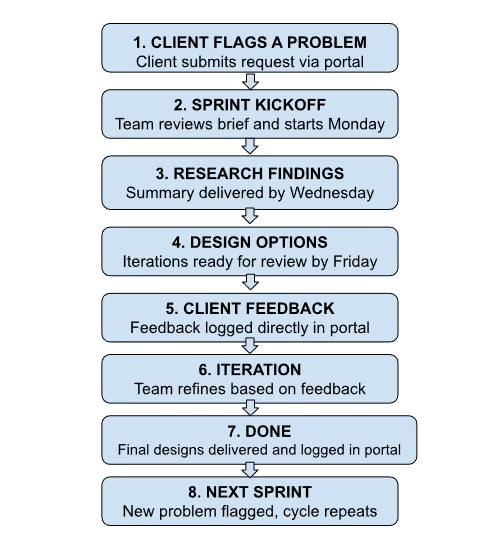
Do not write "we keep clients involved throughout." That is a promise, not a process. Write this instead: "Monday, the brief comes in, Wednesday, the research is back, Friday, the designs are ready for review."
That is what a process section should sound like.
Price for outcomes, not time spent
A client who pays for UX hours watches the clock. They wonder whether a two-hour research session was really necessary. That thinking poisons the relationship slowly.
Price around what the client gets each month, not how long it takes to deliver it. Build tiers around sprint capacity and turnaround time. The choice stays clear, and nobody has to justify individual sessions.
Tell them what happens after they sign
Winning the signature is not the finish line. The client just committed to six months of work with your team and has no idea what Monday looks like.
Write a concrete next steps section. Once they sign, they get a client portal access, their first invoice, and a way to flag their first UX problem. If there is a kickoff call, put the date in the proposal.
What to include in a UX proposal template
Here is every section the template covers:
Cover page
The cover page sets the tone before the client reads a single word. Make sure the service name is specific. "Ongoing UX Design Retainer" or "Monthly UX Sprint Plan" tells the client exactly what they are buying. "UX Proposal" tells them nothing.
Executive summary
One paragraph that shows you were listening. Use the client's own words to describe their UX problem, name the fix, and give them one outcome to expect in the first 90 days. A client who reads this section and feels understood is already closer to signing.
User problem
Write this section for this client, not for every client you have ever had. What is broken in their product, what it is costing them, and what happens if nothing changes. If it sounds generic, rewrite it.
Proposed solution
This section should be a direct response to the problem above it. Whatever the client told you on the discovery call, this is where you show you heard it. Only include what fixes their stated problem. Everything else comes out.
Scope of Work
The scope section is where retainers get saved or lost. Be specific about what the client gets each month, what counts as one sprint, and what falls outside the plan. Vague scope is the number one reason retainers turn into arguments three months in.
UX Process
Show the client exactly how work moves from problem to solution. A clear step-by-step flow tells the client what working with you looks like week to week.
The UX Retainer Delivery Flow
Pricing and billing
Spell out your tiers, the billing date, what happens if they need an extra sprint, and when the contract renews. Clients notice when agencies are vague about money. Do not be that agency.
Case studies
Pull from retainer work, not one-off audits. Name the UX problem, the type of product, and what changed after the retainer started. A case study is proof, not a recap.
Team
Six months is a long time to work with people you have never met. A short bio and a photo for each team member go a long way toward making the client feel confident about who they are handing their product to.
Next steps
Tell the client exactly what happens the moment they sign: portal access, first invoice, first sprint kickoff date. Make it specific. Vague next steps lose deals that were already won.
Common mistakes creative agencies make in UX retainer proposals
Most of these show up before the client reads past the scope section.
Writing it like a project brief.
A scope section with phases and a final handoff tells the client the work ends. Write around the monthly rhythm instead.
Pricing in hours.
Once a client is counting hours, they are no longer buying the outcome.
A consultant on Reddit described it well: after four years of hourly billing, clients who prepaid for 50 or more hours would come back months later arguing over individual line items. "This is a bug. Why would we pay for that?"
The hours became the product instead of the result. Price around the sprint capacity and turnaround time. The client buys what they get, not how long it took.
Leaving the process section vague.
Without a clear process, clients fill the gap with email. Once email takes over, requests get missed, scope gets muddled, and the retainer gets hard to run. A one-page process section stops all of that from happening.
Not writing out billing terms.
Vague billing language is fine until the 4th month, when an invoice looks slightly higher than expected, and nobody can point to a written agreement on what the plan covers. Put the billing date, the plan limits, and the renewal date in the proposal. Every time.
Case studies that describe instead of proving.
Clients reading your proposal want to know one thing: has this agency actually fixed a problem like mine before?
"We improved the onboarding experience for a tech company" leaves the client with nothing to hold on to. "We cut support tickets related to onboarding by 40% in the first two months of a UX retainer," tells them everything they need to decide.
Wrapping up
If you have been sending the same template for both project work and retainers, fix that before your next pitch. Download the free template, add your agency's details, and use it every time you pitch recurring UX work.
A signed retainer is not the hard part. The hard part is delivering on it consistently across every client, every month, without things slipping through the gaps.
Email threads, shared Figma links, and Slack messages work fine for one or two clients. Add a few more, and requests start getting missed, billing gets messy, and clients start wondering what they are actually paying for.
ManyRequests keeps everything in one place: requests, feedback, billing, and client communication. The moment a client signs, they are in their portal. Try it free for 14 days.
FAQs
How do you write a UX proposal?
Lead with the client's problem, not what you offer. Use your discovery call to understand what the UX issue is costing them, then build the proposal around that. Cover the scope, your process, pricing, proof, and exactly what happens after they sign. The goal is to make the client feel understood before they have even agreed to anything.
How do I price a UX design retainer?
Build tiers around sprint capacity and turnaround time, not hours. Each plan should say how many sprints per month, how fast they are delivered, and what is included. Price is based on the outcome the client is getting, not how long it takes your team to get there.
.svg)