Free Graphic Design Scope of Work Template [Docs / DOCX]
Free Graphic Design Scope Statement Template
If you’ve ever delivered a polished brand identity project to a client and they asked if you could explore another direction. You know it's because your services and their expectations did not align.
In this article, I'll guide you on how to avoid this with a well-drafted graphic design scope statement, and I'll share a template that you can customize and send to your clients.
What is a Graphic Design Scope Statement?
A graphic design scope statement is a foundational document that outlines the boundaries, deliverables, goals, and limitations of a creative project.
It defines what you'll design, like logos, social media templates, pitch decks, or packaging, and what’s not included (depending on the project). It also explains how many revisions are allowed, when the work will be delivered, and what the client must provide (like brand assets, content, or creative direction).
This document ensures that everyone agrees on what the project’s end result should be, especially because design is subjective.
Why You Need a Graphic Design Scope Statement
Graphic design projects can lack boundaries. Your client could ask for a logo design, and you’d end up creating a social media kit and six slide deck templates. This happens because you don't have a clear scope statement to clarify the project boundaries.
Other reasons why you need a graphic design scope of work include:
- It Stops Scope Creep Before It Starts
A design scope tells the client what to expect with the project’s outcome. It lets you define how many initial concepts you’re willing to draw, and the number of times you will revise the deliverables.
It tells your clients that anything apart from these terms you’ve agreed on is out of scope, and you will either not do it, or you’ll offer the service at an agreed price.
You can also outline pricing for additional work, so when requests go beyond the original scope, you're prepared.
- Set Clear Expectations on Deliverables
Vague scope leaves the door open for misinterpretation. A well-written scope gives clarity on what the client should expect. You can list exactly what you're creating, and just as importantly, what you're not.
For example:
- Included: Logo, favicon, brand color palette.
- Not included: Printed business cards, merchandise mockups, or website design
Clients are less likely to make assumptions when you have these terms in clear writing.
- Improve Communication and Speed Up Approvals
In graphic design, delays often happen because no one knows who’s responsible for feedback or when to give it. A solid scope statement outlines:
- Who reviews drafts and provides approvals.
- How feedback should be delivered (email, ManyRequests Client Portal, comments in Figma).
- Timelines for feedback (e.g “Client will provide comments within 3 business days”).
It creates a shared process. Your team knows when to expect input, and your client understands when decisions need to be made. That way, you keep momentum without the endless emails.
Creating Your Graphic Design Scope Statement
These are some of the things to include in your graphic design scope of work:
1. Write the List of Design Services and Tasks
List all the services you’ll deliver to the clients. Break these services into tasks so clients know what to expect and what the process will entail. For example, if you're working on a brand identity package, let the client know they'll receive 2 concept logos in colour and black/white, 1 brand color palette, typography recommendations, and a 6-page brand usage guidelines PDF.
If it's a social media kit, add that they’ll get:
- 6 editable Instagram post templates (Figma or Canva)
- 3 cover images for LinkedIn and Facebook
- Template instructions for client team
Add what you won’t be doing for each of these categories. For example:
- Copywriting or proofreading.
- Paid font licensing (client must provide or approve purchase).
- Printing or print file delivery.
2. Add Timeline and Milestones
Graphic design projects are in phases. You’ll do discovery, concepting, revisions, and delivery. Your scope statement should show what happens during each stage.
Here’s an example of what a timeline looks like:
- Week 1: Kickoff call and asset collection
- Week 2: First logo concepts delivered
- Week 3: Client feedback due, revisions begin
- Week 4: Final approval of logo; social media templates begin
- Week 5: Full brand kit delivery
- Ongoing: Email support available for 7 days after final delivery
If you’re on a retainer, build a recurring cadence (e.g., 4 deliverables per month, feedback due every Friday, etc.). Make deadlines clear so nothing lingers indefinitely.
3. Add Deliverables and File Formats
Be crystal clear about what the client will receive when the project is done.
Examples:
- Final logo files: EPS, SVG, PNG (transparent), JPG
- Fonts (if custom or licensed)
- Editable design files (Adobe Illustrator or Figma)
- Presentation slides in Google Slides and PDF formats
- Brand guidelines PDF
Don’t forget to list your delivery method. If you're using ManyRequests, you can send the design directly from your portal to the client's end.
Without leaving the portal, your client can receive the deliverable, go through it, and leave comments for revision through ManyRequests annotation tool.
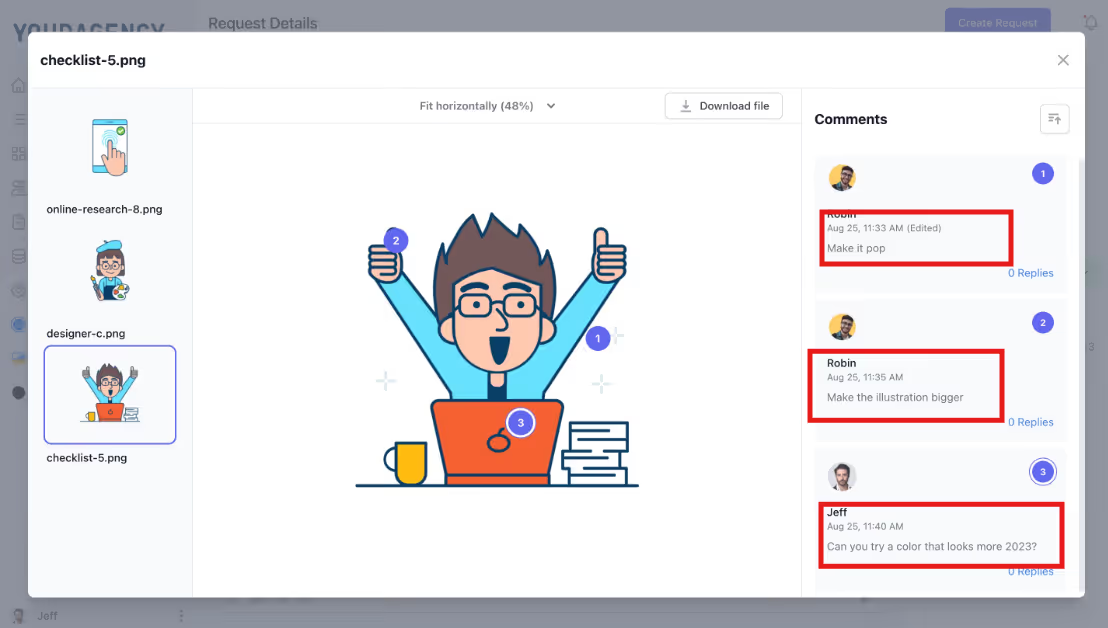
As you can see in the image above, the client leaves annotated comments on the design document for the designer, so they know the exact points they want them to touch.
Learn more about ManyRequests's design annotation feature.
4. Include Out-of-Scope Services
Use this section to protect your boundaries. These are services that clients may assume are included in the project deliverables but aren’t.
Examples:
- Custom illustrations or icon sets.
- Website or landing page design.
- Animated graphics or motion design.
- Brand strategy or naming.
- Printing or product packaging sourcing.
When these items are excluded upfront, it’s easier to have a professional conversation when they come up later. You can always offer them as an add-on.
5. Revision Policy
Set expectations around how many rounds of feedback are included, and what happens if the client wants more.
For example, add that;
- Logo design: Up to 2 rounds of revisions
- Presentation design: 1 revision per draft
- Social media templates: 1 round of revisions after final delivery
You can also include turnaround times. For example:
- Client feedback is due within 3 business days
- Revisions delivered within 2 business days
- Extra revisions billed at $75/hour
6. Include Approval and Point of Contact
Specify who signs off on deliverables, how feedback should be submitted, and what communication channels you’ll use.
Here's what that means:
- All design drafts delivered via email.
- Feedback submitted via comment or PDF markup.
- Final approval required in writing (email or portal confirmation).
- One point of contact is assigned from each team.
You can also schedule a final sign-off call or include a checklist for handover to ensure you don’t miss any details.
How To Use Our Graphic Design Media Scope Statement Template
Here's how to customize our free Graphic design scope statement template to fit your agency's needs:
- Download the template from our website.
- Edit the text to add your business name and logo.
- Fill in all highlighted spaces and italicized words with your information
- Add the specific services you'll offer your client
- Review it with your team members
Conclusion
Graphic design projects can become confusing when you don't set your boundaries at the beginning of the project. You can use our graphic design scope of work template to show your clients what to expect from the project, including the services that are and are not included.
If you want to take things further, you can manage all your project scopes, client requests, and approvals inside ManyRequests. ManyRequests provides a white-label client portal that gives you full control over the project, your team, and your clients. You can learn more about us here and sign up for a 14-day free trial without your credit details to see how it works.
.svg)