Free Content Marketing Proposal Template [Docs / DOCX]
A prospect wants ongoing content, and your content marketing proposal template from last time is already open. You swap in the company name and send it over. Three days later: "We'll think about it." They do not come back.
The proposal had phases, timelines, and a handover section. That is a project structure. Clients who want a long-term content partner do not want to see a finish line. They want to see what happens every month. Here is the structure that shows them that, plus a free template you can grab at the end.
What is a content marketing proposal?
It is a document that pitches a plan for creating and sharing content that helps a business grow. More traffic, more leads, more visibility. It is not a general marketing plan. It focuses on the content itself: what gets made, where it goes, how results get tracked, and what it costs.
How to structure a content marketing proposal for a monthly retainer
Each section below tells you exactly what to write and where it goes.
Executive Summary
State what the client gets each month and what business result they are paying for. Two sentences are enough.
For example: "Four SEO articles go out every month, each targeting your strongest keyword groups, to take your organic traffic from 3,000 to 15,000 monthly visitors in 12 months."Monthly investment: $3,500."
No agency history. No capabilities overview.
The client's current content situation
Before you describe your services, show the client you understand where they are right now.
Are they publishing once a month when they should be publishing every week? Writing content in-house that takes three weeks per article because no one owns the process?
One short paragraph, written for this client. That is what proposes feels personal instead of copy-pasted.
Content strategy and approach
Keep this section short: which channels, what types of content, what topics, and how it connects to their goals. The full strategy comes after they sign.
A Reddit user needed help pitching a marketing plan to their boss, and got the same advice from everyone: show the relevant channels and content types for their situation first, and save the full plan for after approval.
A specific summary tells the client you have already thought it through. A generic one tells them you will figure it out later.
Monthly scope of work
This is the most important section in a retainer proposal, and the one most agencies get wrong. List every deliverable by name, every limit, and everything that is not included.
A clear content retainer scope looks like this:
- 4 long-form SEO articles per month (1,200 to 1,800 words each).
- Keyword brief for each article, sent 5 business days before writing starts.
- 2 rounds of revisions per article, both within 7 business days of the first draft.
- Internal linking suggestions are included with each article.
- 1 monthly report covering keyword rankings, organic traffic, and leads from content.
- Publishing and social posts are not included. The client handles upload and promotion.
That last line stops the month-four argument about why the agency is not also uploading to WordPress and scheduling LinkedIn posts.
KPIs and reporting cadence
Name the numbers before the client asks: organic traffic growth, keyword rankings, and leads from content. Pick the ones that match what the client said they care about on the call.
Content takes 3 to 6 months to show up in search rankings. Say that in the proposal.
The client who expects page-one results in 30 days is the one who cancels at month two. Also, write out what the monthly report covers, when it lands, and what format it comes in. One sentence here saves an entire call later.
Case studies and proof
One case study. Write it around what changed for the client, not what was delivered.
Most agencies write "produced 40 articles over 6 months." That tells the prospect nothing about whether anything moved.
Webb Content did this differently with a financial services client: organic traffic grew from 1,000 to tens of thousands of monthly visitors over 18 months, the client became a known name in their space, and conversions went up 400%.

A prospect sitting at 2,000 monthly visitors reads that and sees a realistic timeline, a real result, and a situation close enough to their own that signing gets a lot easier.
Next steps and e-signature
End with one action. Give them a deadline to sign or a direct link to schedule the first call. A client given two options will often pick the third one: doing nothing.
How to price a content marketing retainer in your proposal
Pricing a retainer is different from pricing a project. The right model depends on how consistent the agency's work is from client to client.
- Flat monthly fee per defined output. Good for agencies with set packages: fixed article count, word count, and revision rounds. Write out every deliverable and include what is not covered. The scope grows without a clear price path when this is left vague.
- Hours-based retainer. Use this when the monthly workload changes depending on the client. Show it as an hour bank with a rate, and include what a typical month looks like. Month one always takes longer than the rest, so say that upfront.
- Performance-linked retainer. This only works if the agency is confident enough to tie part of the fee to a specific result. Write out exactly what triggers the variable portion. If the result depends on the client publishing on time, updating their site, or following up on leads, do not tie the fee to it.
Call it "Investment" and present it with tiers
Label the pricing section "Investment," not "Cost" or "Price."
It signals a working relationship, not a one-time transaction.
Conversion Factory structures its as First Floor at $6k per month, Second Floor at $9k per month, and Third Floor at $12k per month. Each tier has clear deliverables and no surprise charges.
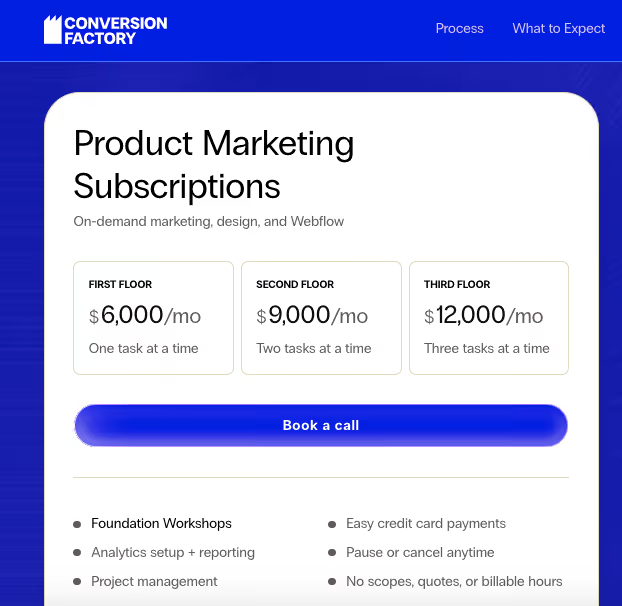
Most clients pick the middle tier, so build that one around what the agency can deliver comfortably right now.
Build the system. Keep the client.
Rewriting a proposal from scratch for every new prospect is where most agencies lose hours they cannot charge for. Download the free template, built for monthly retainer work and ready to use in Google Docs.
Getting the retainer signed is step one. What happens in the first month is what decides whether the client is still around at month six.
Most agencies wing the intake: Slack threads, scattered emails, a client who responds to one out of five messages, and the work is already behind before the first article is written.
A good proposal wins the client. No system to back it up loses them.
With ManyRequests, the client gets a portal to send briefs, track progress, and ask for revisions without a single email thread. Billing runs on its own. Reporting becomes a standing item in the portal instead of a PDF put together on the last day of the month.
Wrapping up
A content marketing proposal built around phases and timelines will lose to one built around a monthly rhythm. Get the structure right, use the template, and the six hours it used to take becomes two, with the time saved going into the sections that matter to the client reading it.
Download the free content marketing proposal template here. Try ManyRequests free for 14 days and see it in action.
FAQs
How do I write a content marketing proposal for a retainer?
Write out exactly what the client gets each month: article count, word count, revision rounds, and what is not covered. Price it as a monthly investment with a few tier options. Set KPIs and a reporting schedule so the client knows from day one how results get measured. End with one clear next step.
What is the difference between a content marketing proposal and a content strategy?
A content strategy is the full plan for how content hits a business goal over time. The proposal is not that. It covers the approach, the monthly scope, and the investment for a specific engagement. The full strategy gets built after they sign.
What is the best way to price content marketing in a proposal?
Three models work: a flat monthly fee, an hours-based retainer, or a performance-linked retainer. Pick the one that fits how consistent the agency's work is, show it after the scope section so the price makes sense in context, and call it "Investment" instead of "Cost." Give three tiers, and most clients will pick the one in the middle.

.svg)