5 Best Zendo Alternatives for Productized Agencies [2026]
Compare the best Zendo alternatives for productized agencies, with better billing, automation, client portals, and workflows.

William Nzewi
This guide breaks down the best Zendo alternatives which perform well especially in areas Zendo falls short. Read to the end especially if you own or run a productized agency.
Best Zendo alternatives (quick picks):
As a productized agency, you're selling clear services and charging on a recurring basis. You also deliver work in a repeatable way, not just managing tasks. It's at this point Zendo’s limitations become noticeable.
Here are the main reasons teams begin looking at alternatives to Zendo.
Zendo supports payments, but it doesn't fit recurring service models.
If you offer monthly design, ongoing SEO, copywriting or marketing retainers, for example, you need billing which fits that model.
With Zendo, you often end up:
There’s no smooth way for a client to upgrade, pause or switch plans on their own. This makes life difficult for both you and your clients.
Billing, for productized agencies, should be a part of the product.
Apart from agreed deliverables, clients also care about the overall experience of working with you. A solid client portal makes this easy.
Zendo lets you add basic branding but it stops short of a fully branded customer experience.
That means:
Zendo isn't built around structured services. That works early on. But as you grow, you'll need:
Without that, every client will feel different. Like you're starting all over again, and your team has to figure things out again and again. That slows you down and makes it harder to scale.
The process should be simple and repeatable when a new client signs up.
In many Zendo setups, you:
This takes time and adds to admin work.
As you get more clients, this becomes a bottleneck, as our team spends too much time on setup instead of doing actual work.
Zendo handles requests well. But it doesn’t cover everything.
So agencies end up using:
A split workflow creates extra admin work.
Zendo isn't built to run a fully productized agency.
It doesn't give you what you need to grow:
It's hard to scale when these pieces aren’t connected.
Here’s what actually matters when comparing Zendo competitors.
This is the foundation. You should be able to:
If billing is separate from your workflow, clients will get confused. Your team will have to track payments manually, making revenue harder to manage.
A good system connects billing directly to the service being delivered.
If the portal is basic, it lowers the perceived value of what you offer. Because your client portal is part of your product, it should have the look and feel of your brand. Like you own it. It should bear your custom domain (e.g. app.youragency.com) and use branded notifications. The interface should be easy to use, something clients can use without outside help.
Every new client should go through the same clear process.
You shouldn’t need to send forms manually or set things up by hand each time, asking the same questions again and again.
So look for a tool that:
Clients shouldn't jump between tools. Neither should your team.
A strong system keeps everything in one place:
Relying on email, WhatsApp, Slack or Drive leads to inefficiency.
Productized agencies run on repeatable work.
Your tool should support that by:
Some tools try to do much more than you need and end up slowing you down. That’s not what you want.
Many Zendo competitors still focus on one part of the workflow such as tasks or communication.
But you need more than that. You need a system where:
This way, you spend more time growing the business.
Here are 5 best alternatives to Zendo for productized businesses.
ManyRequests is an all-in-one platform built specifically for agencies that sell services in a structured, repeatable way.
ManyRequests helps you run the entire agency, not just requests management alone. Instead of focusing on one part of the workflow, ManyRequests connects everything:
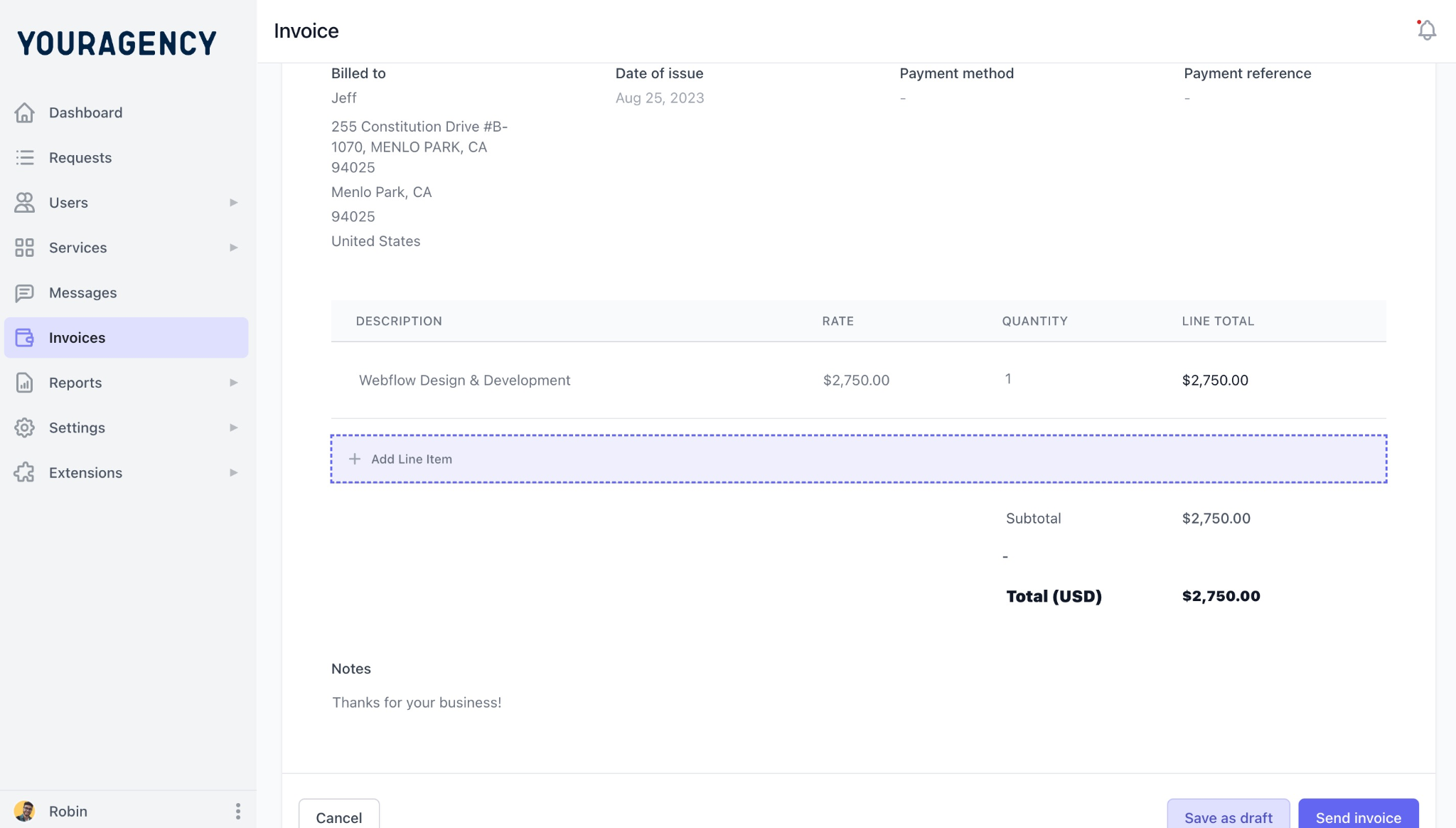
With ManyRequests, billing is part of the system.
You can:
Clients can even control their own billing, pausing, renewing or updating details without your team stepping in.
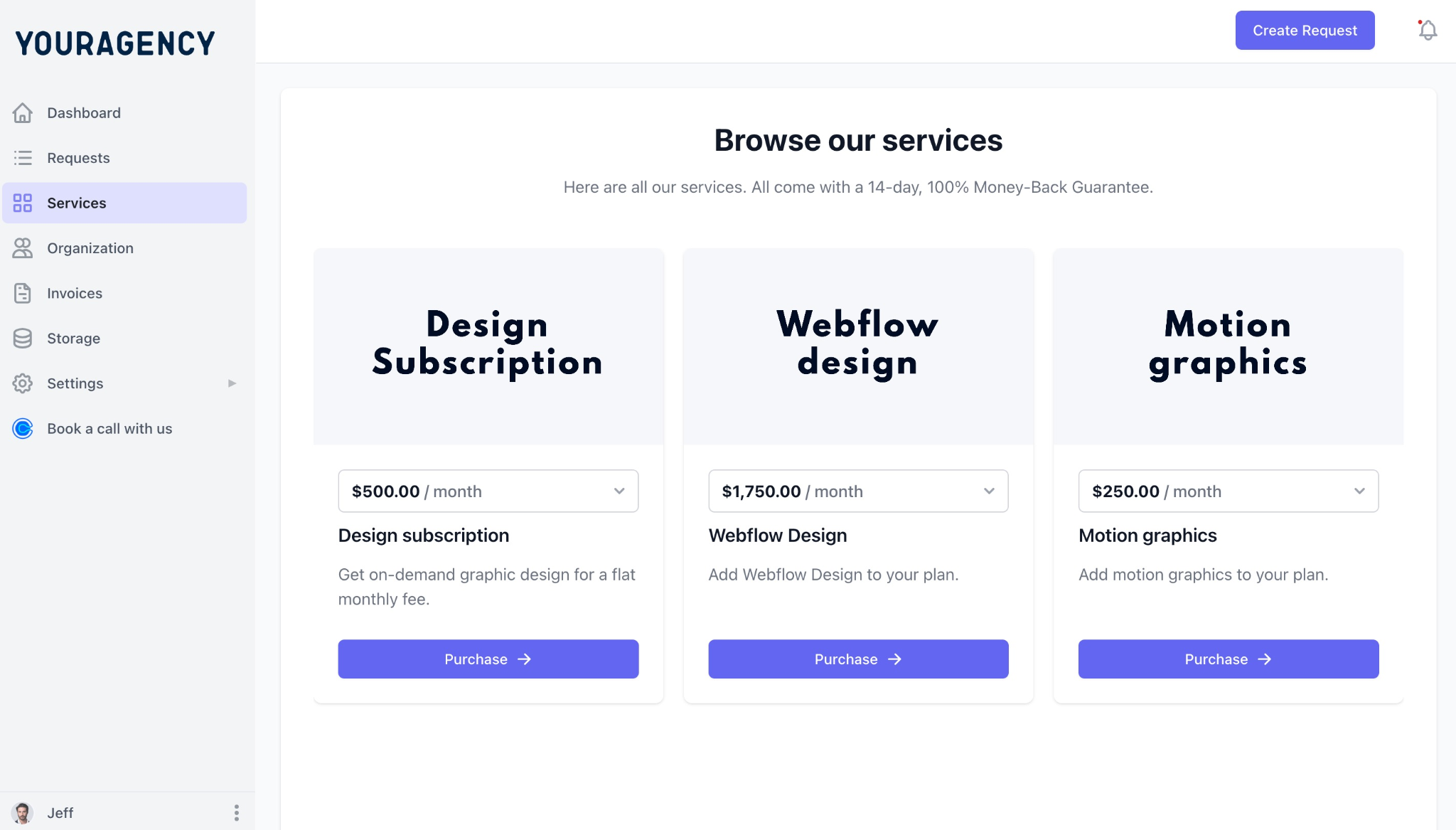
The platform is built around structured services, not open-ended requests.
You can:
This makes productized agencies scalable.
ManyRequests supports different pricing models too:
ManyRequests ensures your client portal looks and feels like your own product.
You get:
It doesn't feel like a third-party tool. This improves how clients see your service and builds trust over time.
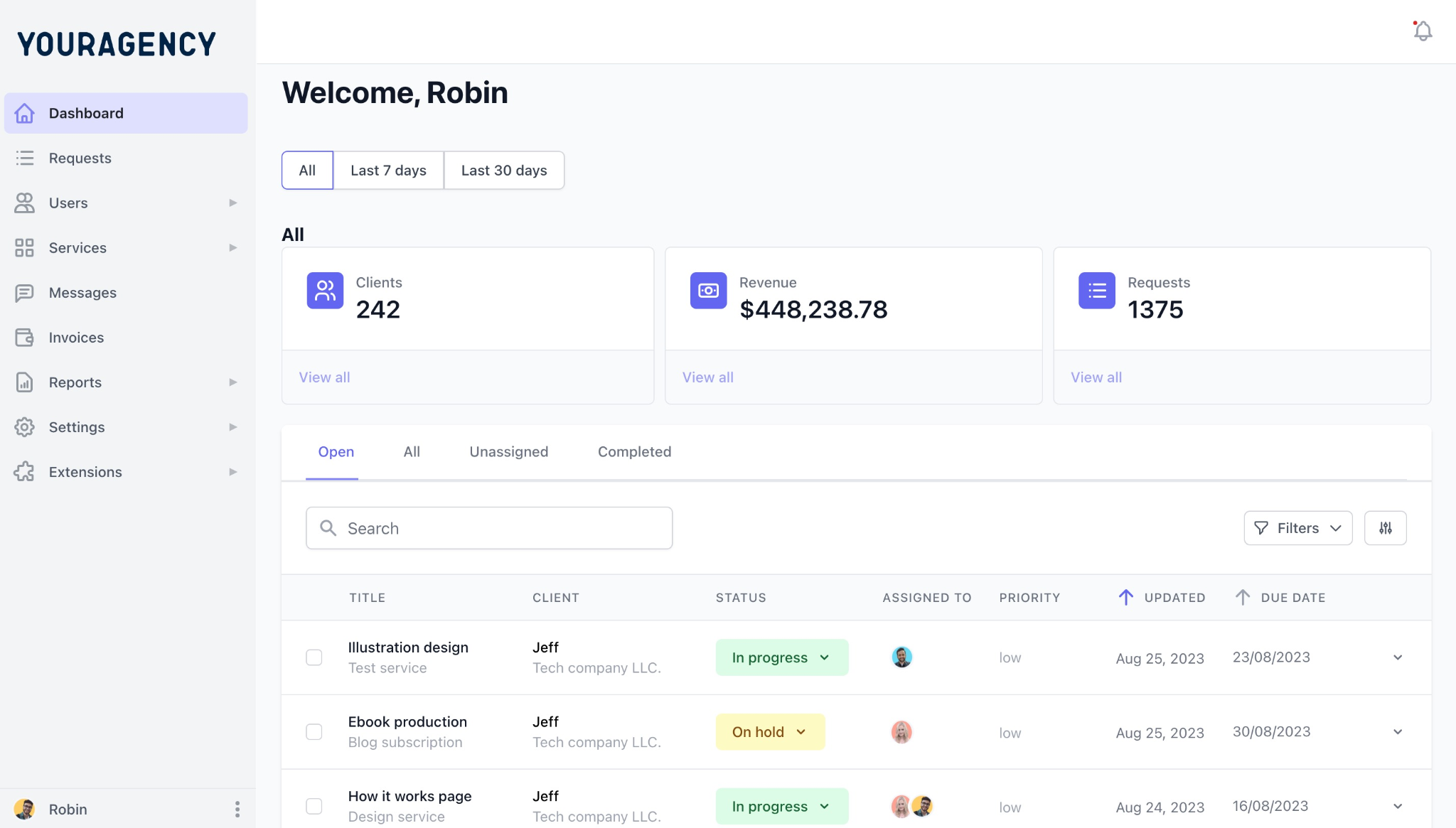
Admin view of ManyRequests’ client portal
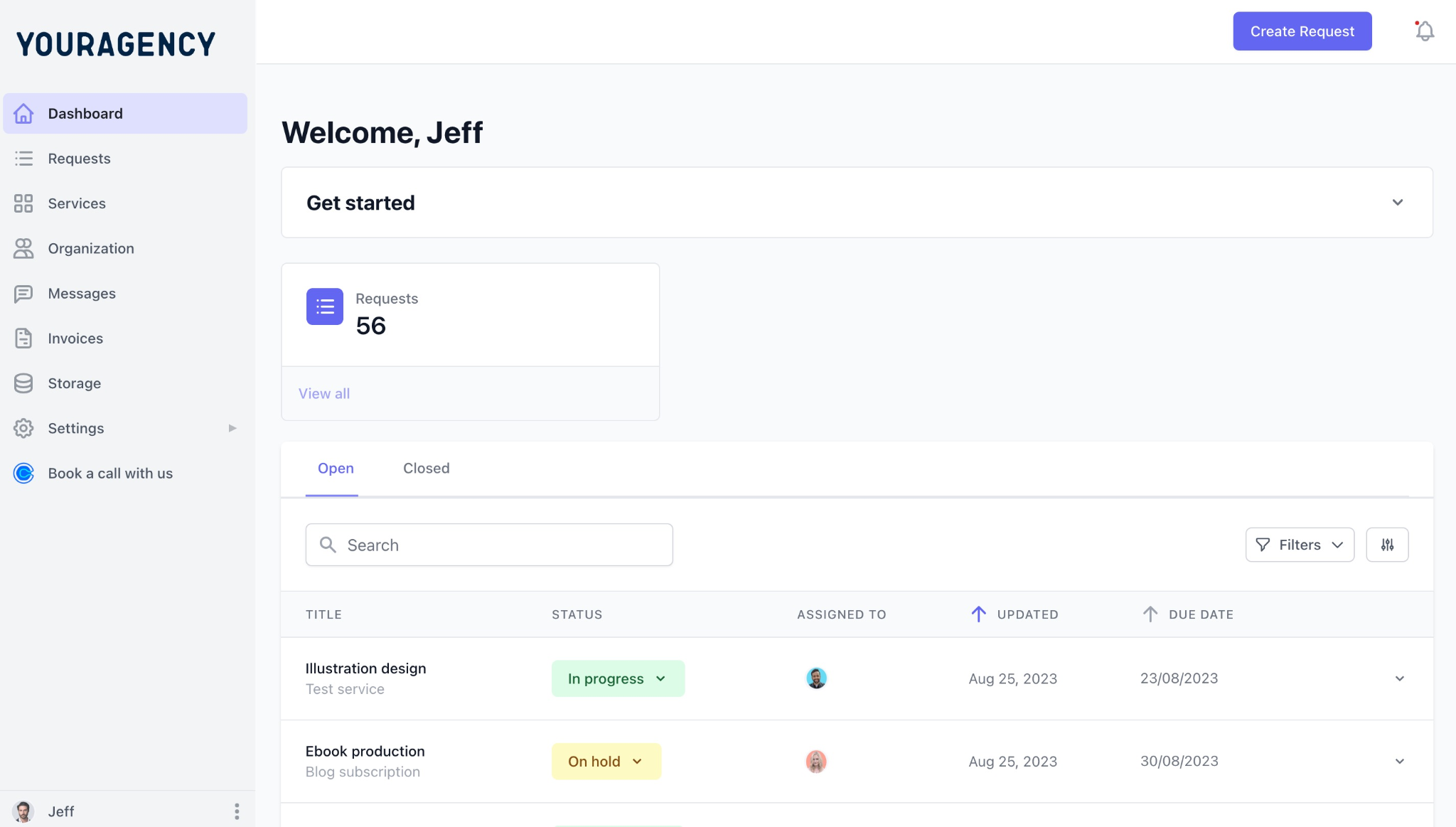
Client view of ManyRequests’ client portal
ManyRequests brings your workflow together:
Instead of jumping between tools, your team works inside one system.
This reduces admin work and gives you a clear view of your business in one place.
This is what sets ManyRequests apart from other Zendo competitors.
Built specifically for agencies, it’s designed for:
You can:
Emmanuel Rivera runs Grayola, a fully remote unlimited design service across two countries and two timezones. They serve over 100 companies in Latin America.
His team has delivered over 1,200 projects through ManyRequests. Their project managers don't have to stress themselves because they can easily manage designer capacity, client satisfaction, feedback and agency performance all in one place.
As your agency grows, small inefficiencies become big problems.
ManyRequests helps you avoid that by:
Agencies using it often move from manual onboarding and messy workflows (with scattered tools) to a clean, predictable system.
For example, Luka Mlakar runs Flowout, a 20+ person Webflow agency serving clients like Sequoia and Jasper.ai. He needed one platform to handle recurring subscriptions and time tracking across a large team. Using ManyRequests, Flowout scaled to $1M ARR in under two years.
ManyRequests solves the exact problems which push people away from Zendo.
There are limits on file uploads and storage:
Max file size: 10GB per file
Storage capped by plan (e.g. 250GB–1TB)
For most agencies, this is fine.
But if you handle large video files and heavy design assets, you may need to rely on external storage tools.
ManyRequests has two main plans: Core at $59/month (or $39/month annually) and Pro at $99/month (or $79/month annually), both starting with 1 seat included. The third tier, Enterprise, starts at $1,000/month with custom seat pricing.
Unlike other tools on the list, every core feature (including subscription billing and agency reporting) is available without you upgrading to a higher plan.
Key takeaway
Choose ManyRequests if you want a full system for running a productized agency
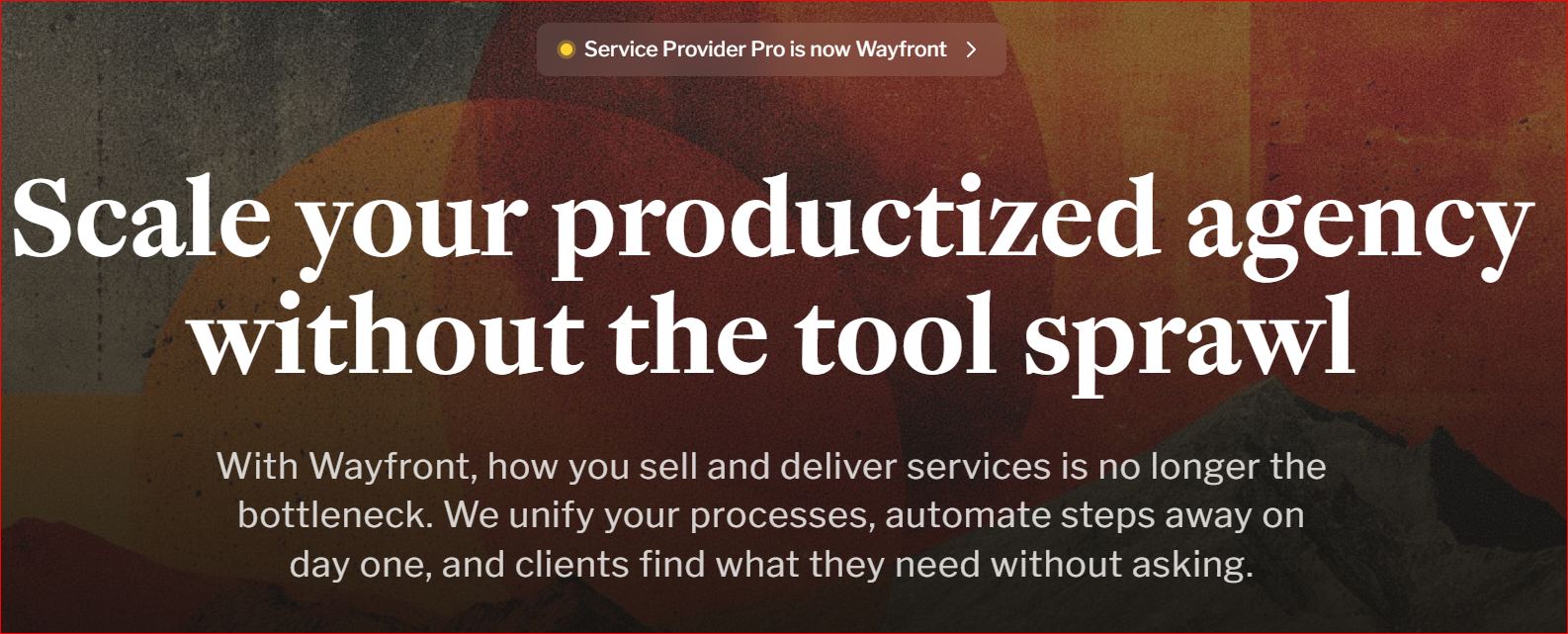
Wayfront (formerly Service Provider Pro) is a client portal and order management tool built for service businesses which want clients to buy and submit work through a structured flow.
Wayfront works for one-off projects, not ongoing subscriptions.
Wayfront is built around orders.
Instead of clients just submitting tasks, they choose what they want and submit details during checkout.
You can list your services in a structured way:
Clients choose a defined service and give you the details you need from the start.
With Wayfront, clients fill in requirements during checkout. You collect the right information upfront and begin the project.
Clients can:
However, the basic nature of the portal means it's not suitable for bigger teams.
If your services are clearly defined and one-time, this tool works well.
For example, website design packages or branding projects.
You can turn each into an offer with a set price and process.
Wayfront has limits, especially for productized agencies.
If you sell monthly services or retainers, you’ll run into problems.
This tool isn't built around recurring service models in the same way as ManyRequests.
You get smooth intake, but not a fully automated system.
You still need to:
Wayfront works best for one-time projects, not recurring work.
It's good for the “Pay once, get a deliverable” kind of setup. But struggles with arrangements where requests are submitted anytime within a recurring cycle.
While it’s better than Zendo for agencies, Wayfront isn't a complete system. It improves how work comes in, but it doesn’t cover the full agency workflow.
You may still need other tools for billing and reporting, for example.
Wayfront has three plans. Basic is $99/month (annual) or $129/month for up to 5 users. Pro is $249/month (annual) or $299/month for up to 10 users.
Plus is $1,500/month for up to 50 users. Adding team members on Basic and Pro will cost $20/user/month
Wayfront offers better control over how clients order services. But it's not a full system for running a productized agency.
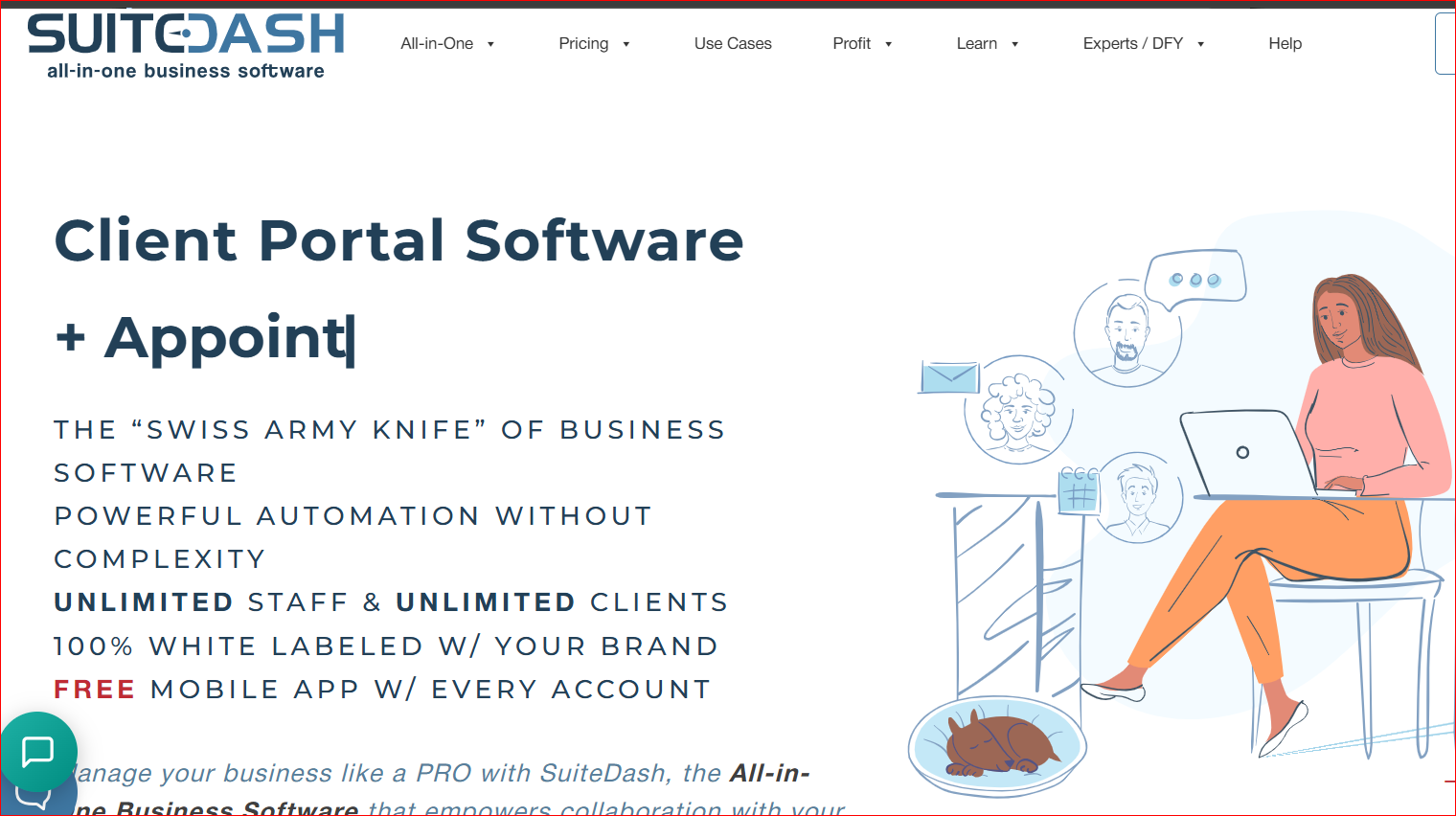
SuiteDash is a business platform that combines a client portal, CRM (Customer Relationship Management), billing, project management and more in a single system.
SuiteDash brings several tools together, reducing the number of separate tools you use.
SuiteDash tries to cover almost everything:
SuiteDash brings a lot of tools together:
Instead of using 4–6 different tools, you have them in one place.
You can:
Clients see your brand everywhere.
SuiteDash includes a CRM, with which you can:
SuiteDash includes automation features such as client onboarding flows and trigger-based task creation.
SuiteDash looks powerful on paper but there are trade-offs.
Because it tries to do so much, it takes time to learn.
You need to:
This becomes a barrier for many agencies. You may be better off with a simpler, streamlined tool which fits your workflows better.
SuiteDash is built for:
That means:
You don’t just sign up and start. You need to set up workflows and customize the portal. This can be overwhelming.
More features aren't always better.
SuiteDash includes:
But many agencies don’t need all of that. This can slow you down.
SuiteDash has three plans. Start is $19/month, Thrive is $49/month, and Pinnacle is $99/month. However, key features like automation and LMS are available only in the highest tier, Pinnacle.
SuiteDash offers many features but requires time to set it up. It isn't the easiest or most direct fit.
A simpler, focused system built specifically for productized agencies may be better for your agency .
4. Assembly
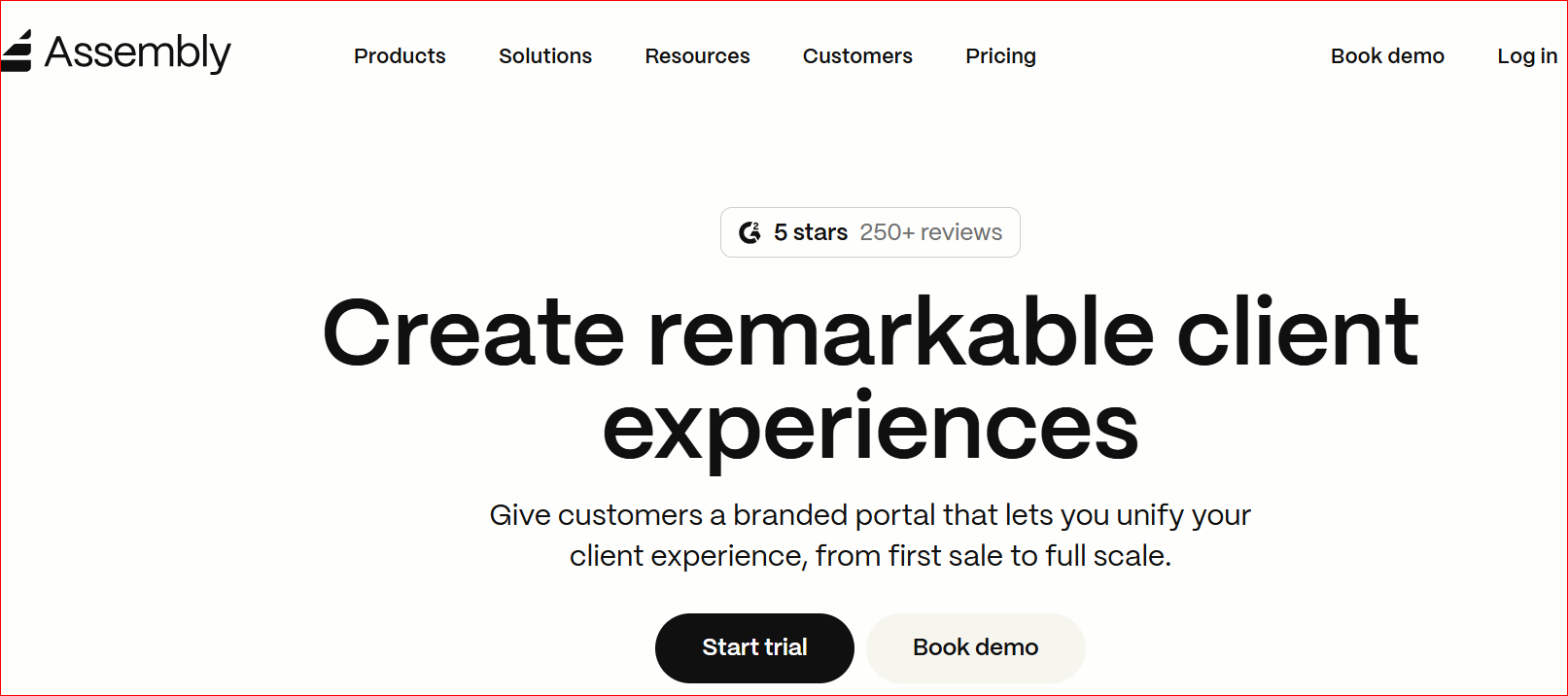
Assembly, a client portal platform, helps service businesses manage client communication, onboarding, billing and collaboration in one place.
If your priority is how your service feels to clients, Assembly is a decent option.
Assembly focuses on the client experience.
Instead of just collecting tasks, Assembly gives clients a central place to:
The interface is simple and well-designed. It's also easy for clients to use. They can log in (even with passwordless login options) and see everything in one place.
Assembly gives you solid branding control.
You can:
This helps your service feel more professional and consistent.
Assembly includes several built-in tools:
You can embed tools like Airtable and Calendly, and connect with Zapier or APIs.
Assembly is strong on experience but weaker on structure.
Assembly doesn’t give you:
Assembly supports billing and subscriptions but:
So you still need to manage parts of your billing manually.
Assembly acts as a central place for client interaction. But it doesn’t fully replace your internal workflow system or delivery process.
In many cases, agencies still rely on other tools.
Assembly isn't as “ready out of the box” for productized agencies tools like ManyRequests. You need to decide how to structure things. You also need to connect other tools. So you’ll spend time setting it up. This means additional admin work.
Assembly has four plans. Starter is $39/month for 1 user and up to 50 clients. Professional is $149/month for 3 users (extra users at $39/user) and up to 500 clients.
Advanced is $399/month for 5 users (extra users at $59/user) with unlimited clients. Enterprise starts at $2,000/month with custom user seats.
Full white-labeling (including removing the "Powered by Assembly" badge) is available only on the Advanced plan.
Assembly offers a polished, flexible client portal which improves how clients interact with your agency.
But it lacks a structured system for subscription services and repeatable delivery.
It makes your service look better but it doesn’t fully change how your agency runs.
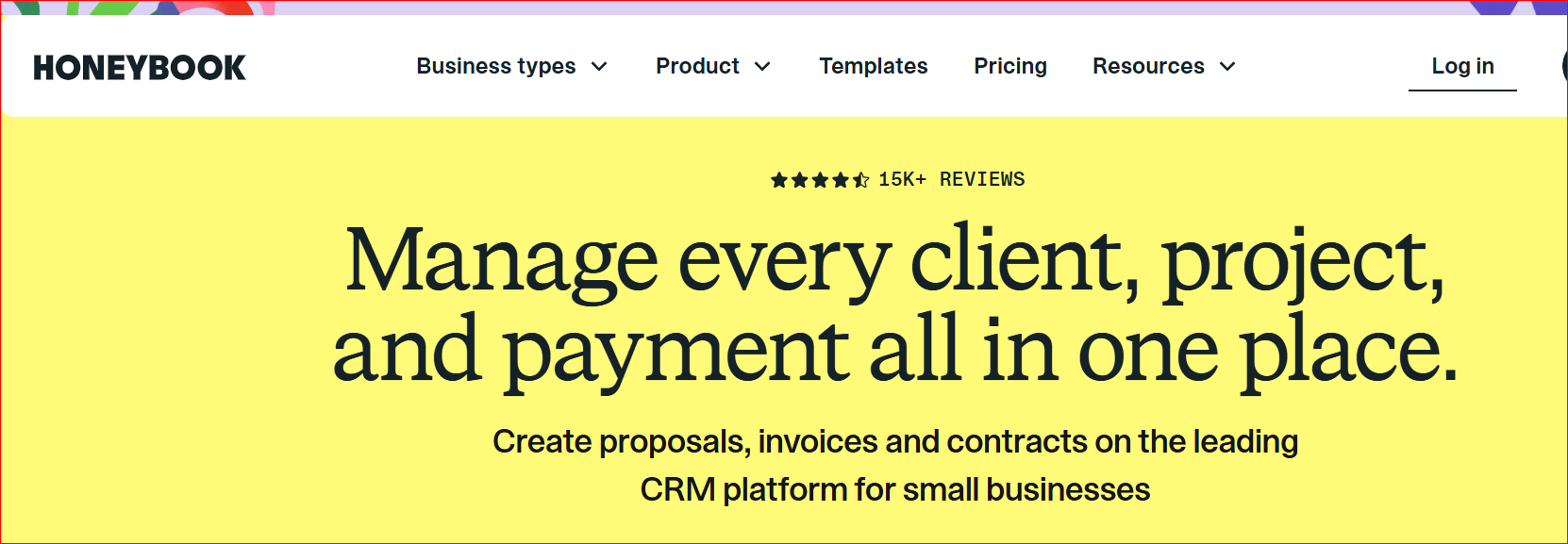
HoneyBook is a client management platform focused on proposals, contracts, invoicing and payments.
If your work is mostly project-based and you need help with sales and onboarding, HoneyBook can work well.
HoneyBook focuses on sending proposals and signing contracts, then collecting payments.
It’s more about winning and onboarding clients than managing ongoing work.
HoneyBook makes it easy to create professional proposals and send contracts for e-signature.
Combining pricing and scope in one flow is good. Clients can sign and pay in one place.
This creates a smooth first impression.
You can send invoices and accept online payments. Then set up payment schedules.
For one-off project-based work, this is okay, as it helps you get paid faster and reduces follow-ups.
Once a client agrees to a proposal, HoneyBook can guide them through signing contracts and making payments.
This makes the onboarding process more organized and professional.
HoneyBook has a simple design.
You don’t need complex setup or technical knowledge. Onboarding time is good.
This is helpful for solo operators.
HoneyBook works well for sales and onboarding but it has some shortcomings for agencies.
HoneyBook is designed for projects, not continuous work.
It doesn’t support:
If your clients need to submit requests regularly, you’ll need another tool.
There’s no real system for:
You can create packages in proposals, but it’s not the same as true service packaging.
HoneyBook supports payments, but the subscription feature is basic.
You'll run into limits or need workarounds if you run monthly retainers or subscription-based services.
Clients can view proposals and sign contracts. They can also pay invoices.
But they don’t get a full portal where they get to submit requests and monitor work to give feedback.
This makes HoneyBook less useful after the deal is closed.
As your agency grows, you need structure and repeatable workflows. HoneyBook isn't designed for that level of scale.
It works best when you manage fewer clients and each project is handled individually.
HoneyBook has three plans. Starter is $36/month (or $29/month annually), Essentials is $59/month (or $49/month annually) and Premium is $129/month (or $109/month annually).
HoneyBook helps with proposals, contracts and payments. But it can't manage client work at scale.
HoneyBook helps you win clients but it doesn't support a structured, subscription-based model.
ManyRequests vs Zendo vs Wayfront vs SuiteDash vs Assembly vs HoneyBook
Both Zendo and ManyRequests give you a client portal. Both let clients submit requests and communicate with your team.
But they're built for very different purposes. Zendo is a tool for managing client work. ManyRequests is an all inclusive system for running a productized agency.
Zendo works best when:
You get a client portal and basic branding options. For small teams or early-stage agencies, that may be enough.
But the limitations show up as soon as you try to scale.
ManyRequests is built for a different goal: running a productized agency.
Instead of focusing only on requests, it connects the full workflow:
An all-in-one system.
With ManyRequests, you can:
It’s designed around repeatable services, not open-ended or one-off work.
Zendo: Payments are possible, but not tied to service delivery.
ManyRequests: Built-in billing tied to services and subscriptions.
This changes how your business runs.
With Zendo, billing is something you manage. But with ManyRequests, billing is part of the system.
Zendo: No real structure for services.
ManyRequests: Create plans and recurring offers.
This is key for productized agencies. Without a service structure, many agencies struggle.
Zendo: Often manual (forms and manual setup).
ManyRequests: Built-in intake forms and onboarding flows.
That means faster setup.
Zendo: Basic branding (logo, limited customization).
ManyRequests: Deeper white-label control (custom domain, full portal experience).
This directly affects how professional your service feels.
Zendo: Focused on request management.
ManyRequests: Built as an end-to-end system.
This is the biggest difference.
Zendo helps you handle tasks.
ManyRequests helps you run operations.
For a solo operator or a small agency, you might get by with Zendo especially early on in your journey.
But if you’re selling recurring services (with standardized delivery) and scaling client volume, you’ll need more than a portal.
Get a tool which fits. A tool that offers you:
ManyRequests ticks all those boxes.
Try ManyRequests for free today and see how a productized agency system should work.
Zendo helps small businesses and freelancers collect and manage client tasks in one place.
Yes, for simple workflows. But agencies running subscription or productized services may find it limiting.
Zendo doesn't suit the agency model. It lacks key features agencies need to run and scale smoothly and profitably.
The main limitations are weak subscription support and no clear way to package services. It’s also not built to handle repeatable, productized workflows at scale.
ManyRequests is one of the best options because it includes subscription billing, service packaging, request intake, project management and automation built specifically for productized agencies.
Yes. ManyRequests can fully replace Zendo by handling client requests, billing, onboarding and service delivery in one platform.
Yes. A client portal helps you manage requests, communication, billing and delivery in one place. It also improves the client experience and reduces back-and-forth emails, which becomes important as you scale.
1. See how ManyRequests works in real life. Start a free trial and experience how productized agencies centralize requests, reduce chaos, and streamline delivery, without changing their entire workflow.
2. Read our Implementation Guide to launch smoothly with your team and clients.
3. Follow us on LinkedIn and YouTube for practical agency growth strategies
4. Check out The Productize Blueprint to learn how to turn your services into a scalable, productized offer.
William Nzewi is a data scientist and a writer. He likes to read and learn new things, especially about tech, business and life.