Wrike vs Basecamp: Best Choice for Creative Agencies in 2026
Wrike vs Basecamp: One is too complex, one is too simple. Find out which fits your agency and discover the smarter all in one choice.

Regina Ongkiko
Wrike vs Basecamp—which one’s right for your creative agency in 2026? Both are trusted project management tools for agencies. But if you zoom in, you’ll start to wonder if they’re really built for creative agencies.
Because besides being task-oriented, your creative agency is also client-heavy, feedback-driven, and often knee-deep in billing, briefs, and endless revisions. These factors start to show the cracks in generic project management tools for agencies.
In this post, we’ll do a Wrike vs Basecamp comparison through the lens of agency workflows and show you why ManyRequests has quietly but consistently become the go-to preferred platform for creative teams in 2026.
Most tools’ structure revolves around tasks and projects. Everything else (clients, files, revisions, billing, feedback) is an add-on. But those aren’t simply extras in a creative agency—they’re the workflow. So ideally, the project management tool for agencies has these features:
Every campaign, brief, and deliverable starts with a client. A tool built for agencies keeps the client at the forefront. This means all their requests, assets, conversations, and billing are visible in one place.
Creative work starts with a request. A great system makes it effortless for clients to submit clear briefs, upload assets, and track progress.
Creative time is billable time. When time tracking, budgets, and invoices live inside your project tool, you finally see where profit is earned, without bouncing between platforms.
You need quick access to current versions, a full revision history, and easy delivery links. That’s how you protect your team from errors and rework.
Most tools show what’s overdue. Few show what’s profitable. Creative agencies need reporting that links every stage of creative work to its business outcome.
So, without further ado, here’s our Wrike vs Basecamp comparison. We’ll assess them in a fair, creative-agency-focused way, stacking up their strengths, gaps, and where they fit in.
Wrike is a solution for easy tracking of project status, deadlines, and responsibilities. It’s a flexible, feature-rich platform capable of handling large, multi-project programs with intricate dependencies, resource demands, and governance needs.
Key features include:
Strengths:
Limitations for agencies:
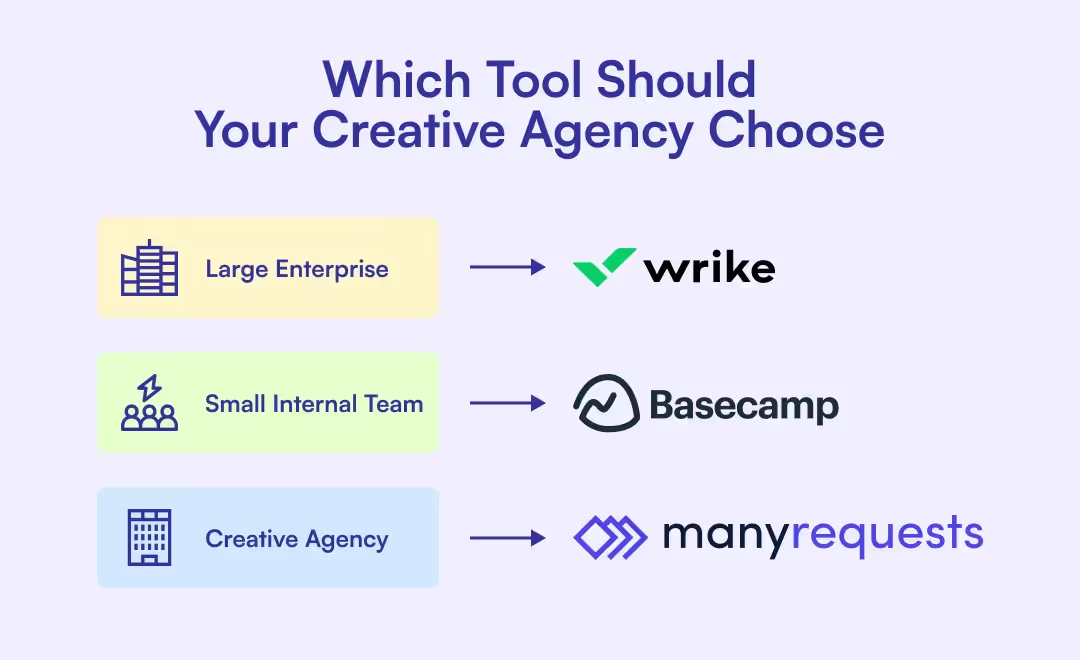
Best for: Large marketing departments or enterprises.
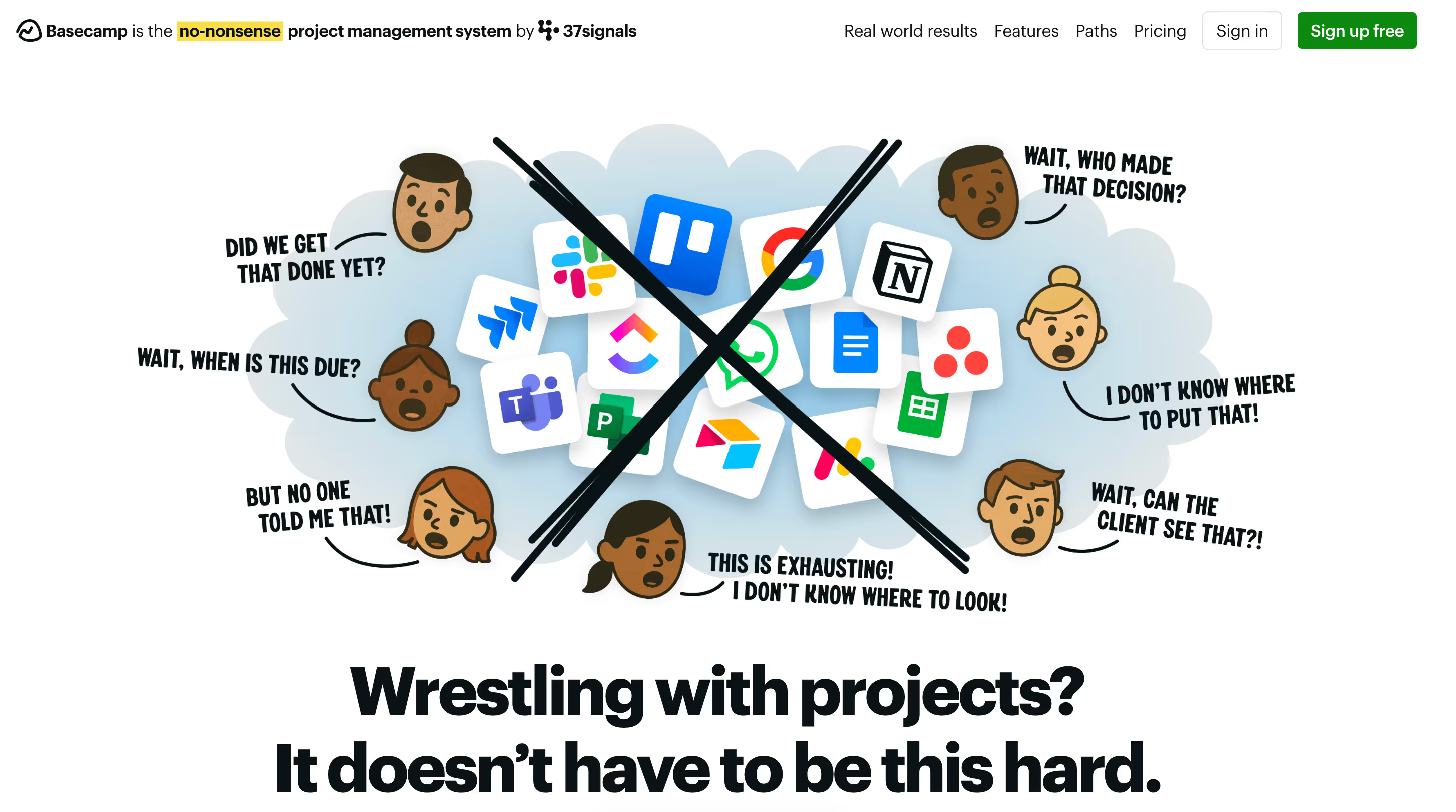
Basecamp keeps you organized without being complicated. Keywords “without being complicated.” It has the features that teams actually use every day: chat, to-dos, file sharing, and scheduling—all in one uncluttered space.
Key features include:
Wide range of integration options
Suppose your agency uses a variety of tools (design systems, billing platforms, feedback loops) and you want a single collaborative space to tie them together. In that case, Basecamp’s wide integration ecosystem is a huge advantage. It means you don’t have to rebuild everything or switch your team off their preferred tools—you just connect them and keep your workflow smooth.
All-in-one hub for client projects
Basecamp keeps everything: discussions, tasks, files, and schedules in one clean, central space. No more “where’s that version?” hunts or endless reply-alls. Each client gets their own tidy project hub, so your team can move faster, approvals land sooner, and deadlines stop slipping.
Clear communication channels
Message boards. Real-time chats. Threaded convos right where the work happens. Basecamp keeps feedback tied to the actual deliverable, not buried in a Slack thread from three days ago. It means fewer missed notes, cleaner feedback cycles, and a team that spends more time creating and less time chasing updates.
Strengths:
Limitations for agencies:
Best for: Small teams with light collaboration needs.
Now, if you’re tired of choosing between “too complex” and “too simple,” ManyRequests gives you the best of both worlds. It combines the power and structure of a tool like Wrike with the clarity and ease of a tool like Basecamp.
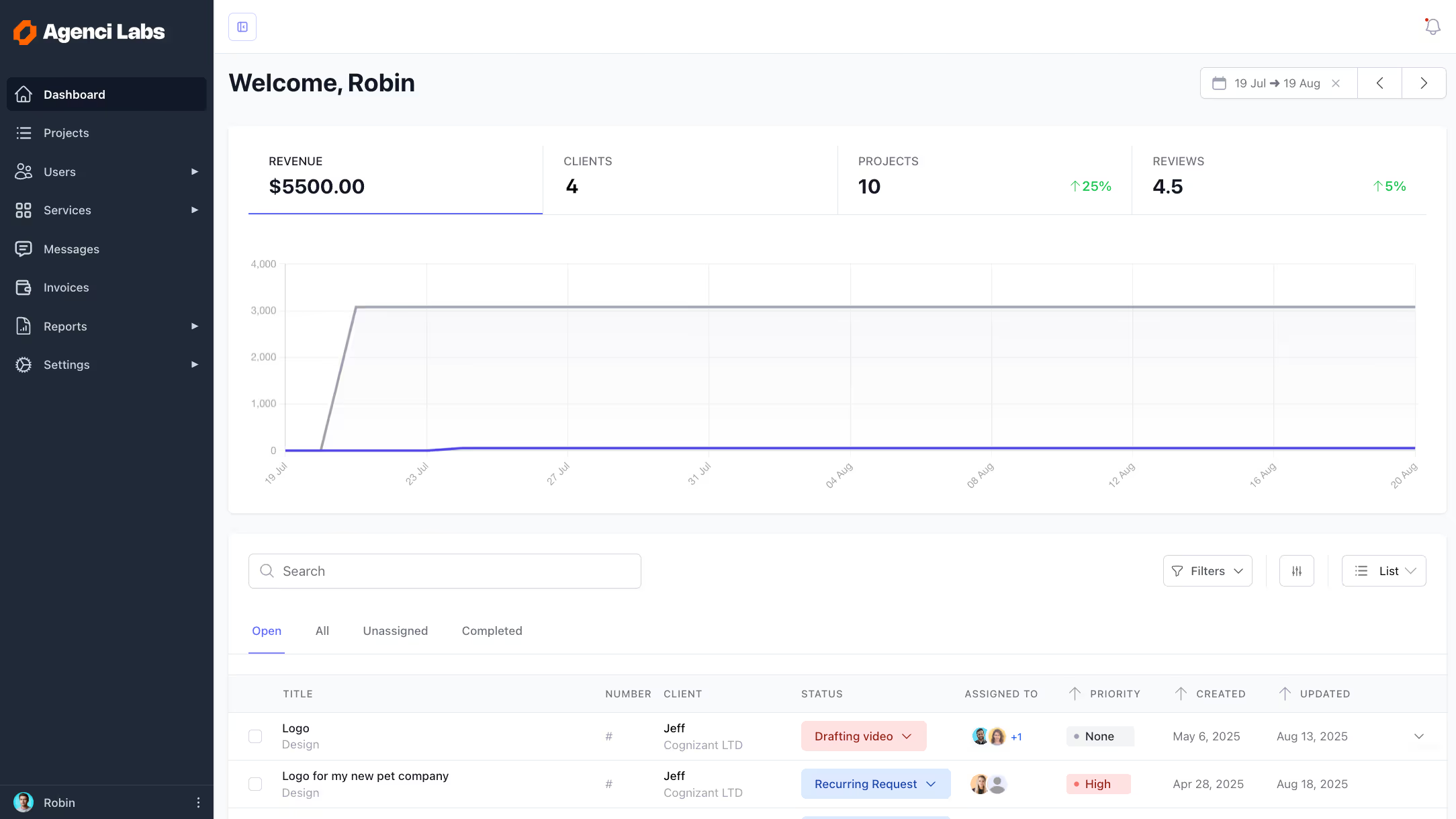
Most importantly, ManyRequests is built specifically for creative agencies. Here are its key benefits:
Meaning every piece of your agency’s workflow, from onboarding new clients to sending the final invoice, connects inside one smooth system.
Still not sure which one fits your agency best? Here’s a clear breakdown of how Wrike, Basecamp, and ManyRequests stack up feature by feature.
Each tool serves a different type of team—and the right choice depends on how your agency operates.
TL;DR
If Wrike feels too complex and Basecamp too limited, ManyRequests strikes the perfect balance. It’s structured enough for scale and simple enough for speed. Because for creatives, alignment matters more than features.
So, if you need a single workspace where client communication, production tracking, and billing operate together, pause the Wrike vs Basecamp comparison. ManyRequests is the project management tool for agencies like yours.
See why creative agencies are switching to ManyRequests. Start your free trial today.
Wrike focuses on complex project tracking and automation for large teams. Basecamp emphasizes simplicity and communication for smaller, less formal teams.
Both. It combines project tracking, client communication, and even billing into a single branded platform.
Yes. It’s built to handle project management, client portals, and invoicing in one workspace—removing the need to combine multiple tools.
Yes. You can view capacity across your team, track assignments, and adjust workloads in real time.
ManyRequests pricing generally uses a multi-tier structure with monthly and annual options. Starter Plan: $19/month, Core Plan: $39/month, Pro Plan: $79/month—billed annually. Take note that all plans come with a 14-day free trial.
1. See how ManyRequests works in real life. Start a free trial and experience how productized agencies centralize requests, reduce chaos, and streamline delivery, without changing their entire workflow.
2. Read our Implementation Guide to launch smoothly with your team and clients.
3. Follow us on LinkedIn and YouTube for practical agency growth strategies
4. Check out The Productize Blueprint to learn how to turn your services into a scalable, productized offer.