What is a Productized Service? The Complete Guide [2026]
What is a productized service? Learn how it works, its pros and cons, real examples, and how to decide if it's right for your agency.

William Nzewi
Are you a solo consultant or small agency owner who wants to know more about productized service and how to apply it to your business? This is for you.
You'll get a clear explanation, a way to evaluate fit and how to get started.
A productized service is a service delivered with a fixed scope, a fixed price, and a repeatable process. Instead of creating a new offer for every client, you turn a service you already know how to deliver into a clear package with defined boundaries.
The client knows what they will receive, what it costs, and roughly how the work will be delivered.
The easiest way to see the difference is to compare a custom branding project with a productized logo package.
A traditional branding agency might quote each client based on the number of brand assets, research needs, revisions, and timeline. Every project is different.
A productized design service might offer a Logo Package for $1,500, which includes:
The service is still done by a designer, but the offer is structured more like a product.
.png)
Productized services sit somewhere between traditional freelancing and the traditional agency model. All three sell expertise and services, but they differ in how the work is packaged, priced, and delivered.
A freelancer might tell a client, "I can manage your social media for $2,000 a month," then work out the exact tasks as the relationship develops.
A productized service would turn that into something more specific:
"Monthly Social Content Package: 12 posts, 4 short-form videos, captions, scheduling, and one revision round for $2,000."
The client is buying a defined package.
A traditional agency can offer the same type of work, but it may build a custom proposal around each client's goals, channels, budget, and team requirements.
That flexibility is useful when clients have complex needs. The tradeoff is that every new project can require a new scope, quote, workflow, and delivery plan.
The productized model scales by making the same service easier to sell and deliver repeatedly. You still need people, expertise, and client communication. But the business is less dependent on reinventing the work for every client.
Productizing a service can make a small service business easier to run and easier to grow. But it also means giving up some of the flexibility that comes with custom work. It is not automatically a better business model.
Here are the pros and cons of the model:
More predictable revenue: When your services have clear packages and prices, it becomes easier to forecast what each client is worth and how much work you can take on. If you sell a $2,000 monthly content package, for example, you know roughly what that client pays and what your team needs to deliver.
Easier to sell: Clients don't have to figure out what they need from a long list of services. A clear offer gives them a simple buying decision: here's what you get, here's the price, and here's how it works.
Less scope creep: A defined package gives you a clear answer when a client asks for something outside the original agreement. Instead of debating whether a request is included, you can point back to the scope and offer the extra work separately.
Easier to hire and train: When delivery follows a repeatable process, a new team member doesn't have to learn a completely different workflow for every client. You can teach them how one service is delivered, then improve that process over time.
More scalable delivery: Custom work often grows more complicated as you add clients. A productized service gives you a chance to improve the same workflow again and again. Better templates, processes, tools, and quality checks can help you handle more work without increasing complexity at the same rate.
Less flexibility: The biggest tradeoff is that productization puts boundaries around the service. A client who wants something completely different may not fit the package, even if you could technically do the work.
Some clients will push back: Not every buyer wants a fixed package. Larger clients or clients with unusual requirements may prefer a custom engagement. Trying to force these clients into a productized offer can create friction for everyone.
Some services are difficult to standardize: A service built around highly bespoke strategy, research, or complex problem-solving may change significantly from one client to another. You can often productize parts of it, but turning the entire service into one fixed package may not make sense.
You can over-standardize: A productized service should make delivery more consistent, but not ignore what clients need. If your rules become so rigid that good clients cannot get reasonable help, the model starts working against you.
You don't have to eliminate customization completely. The goal is to decide where customization adds value and where standardization makes the business stronger.
For many small agencies and consultants, the sweet spot is a clearly defined core service with limited, controlled flexibility around it.
Not every service needs to become a productized service. The strongest candidates have three things in common: a repeatable process, a defined deliverable, and a scope you can predict before the work starts.
Think about what you already do for clients. If you've delivered the same type of service several times, you probably have more structure than you realize. The work may look different on the surface, but the steps underneath are often similar.
For example, a web designer may build different websites for different clients, but the process might still follow the same basic path:
That makes parts of the service easier to package.
On the other hand, a consultant who is hired to solve completely different business problems for every client may struggle to define one fixed offer. The value comes from adapting the work to each situation, so a rigid package may not be a good fit.
Ask yourself these questions about the service you are considering:
Have I delivered this service repeatedly?
If you've done similar work for several clients, you already have a process you can study and refine.
Can I describe the final deliverable clearly?
A client should be able to understand exactly what they'll receive. "Marketing support" is vague. "Eight SEO-optimized blog posts per month" is much clearer.
Can I predict the amount of work involved?
If one client takes three hours and another takes 30 hours for what appears to be the same service, you may need to narrow the scope before productizing it.
Can I define what is included and excluded?
A strong productized service has boundaries. You should be able to say:
Would another capable person be able to follow the process?
You don't need to remove your expertise from the service. But if the entire delivery process exists only in your head, it will be difficult to make the offer repeatable.
If you answered yes to most of these questions, your service is probably a good candidate for productization.
If you answered no to several, that doesn't mean you can't productize your business. It may mean you need to start with a smaller part of the service.
For example, instead of productizing an entire marketing strategy engagement, you could package a specific deliverable such as a competitor research report or monthly content plan.
You don’t need to redesign your entire business to create a productized service. Start with one service you already deliver well, then turn the parts that repeat into a clear offer.
Start with something you already know how to deliver. Don't begin by inventing a completely new service just because it sounds easy to package.
Look at your recent client work and find a service that appears again and again. Maybe you:
For example, if you regularly create websites for small businesses, you could start with a specific offer such as "5-Page Business Website" and not try to productize every type of web development you provide.
Next, turn the service into a clearly defined package.
Specify the:
Just as importantly, state what's not included.
For the website example, the package might include five pages, a responsive design, contact form setup, basic SEO settings, and two rounds of revisions.
It might exclude copywriting, custom integrations, ecommerce functionality, and ongoing maintenance.
These boundaries protect you and the client from unclear expectations.
Set a price for the package once you know what the client gets.
The price should reflect the value of the outcome as well as the cost of delivering it. You don't have to show clients an hourly calculation. In fact, one of the benefits of productization is moving the buying decision away from your hours and toward a clear result.
You can also create simple tiers when there are meaningful differences in what clients need.
For example, a basic website package might cover five pages, while a higher tier includes ten pages and additional support.
Now write down how the service gets delivered from start to finish.
Document the:
For a content package, that might look like: client intake → topic research → outline → first draft → internal review → client review → revisions → final delivery.
Finally, make it easy for a new client to start without a long chain of emails and manual explanations.
Create a simple intake process that collects everything you need before delivery begins.
Depending on the service, that could include:
The client should know what happens after they buy, what you need from them, and when they can expect the work.
Before you begin, make sure people actually want the service. Test whether your offer is worth buying before you invest heavily in building it.
Create a simple version of the offer with a name, clear deliverables, price, and expected turnaround time. Then present it to potential clients.
You might discover that people like the outcome but think the scope is too narrow. Or they may want the service but consider the price too high.
If someone is willing to pay for the service based on the initial offer, that's a stronger signal than a list of people saying they "would be interested."
Choose a small group of existing or potential clients and offer them the service as a beta.
You can offer an early-client price in exchange for honest feedback and permission to learn from the engagement. Keep the scope controlled, then pay attention to what happens during delivery.
Where do clients get confused? Which part takes longer than expected? What questions keep coming up? Which deliverables do they value most?
Your existing clients are often one of the best places to test an idea because they already understand your work.
Ask what they value most about your current service, which parts they would pay for on an ongoing basis, and what they would remove if it made the offer simpler or cheaper.
You can also look for patterns in past projects. If several clients have asked for the same deliverable, that may be a good candidate for a productized offer.
You can also create a basic landing page describing the service and share it with your audience, email list, or network.
Look for real actions: people asking questions, booking calls, requesting the offer, or buying it.
Don't assume the entire productized model is wrong if your first offer gets no traction.
The problem could be the service, positioning,odt price. Maybe the deliverable solves a weak problem, or maybe the right clients don't understand why they need it. You may also be targeting a market that prefers custom engagements.
Use the feedback to change one part of the offer and test again. If several rounds of testing produce little interest, move on to another service.
A productized service can be clearly defined and still be difficult to sell if the positioning is weak. When you offer a broad service to everyone, buyers have to work out whether it is meant for them.
Good positioning answers three basic questions:
This matters even more with productized services because the offer is intentionally narrow. You're showing the prospect that you have a specific solution to a specific problem.
Instead of offering "social media management for businesses," you could offer "monthly content packages for SaaS brands." The second offer immediately tells a particular type of buyer that the service was designed with their needs in mind.
You can narrow your positioning in several ways:
By industry: SEO services for law firms
By buyer: LinkedIn content for B2B founders
By deliverable: Conversion-focused landing pages for startups
By problem: Local SEO packages for businesses trying to increase calls
By business stage: Brand identity packages for new companies
A productized service should describe what the client gets, but the positioning should also make clear why they should care.
For example, "12 SEO blog posts per month" describes a deliverable. "12 search-focused articles per month for SaaS companies building organic traffic" gives the buyer more context about the intended result.
You shouldn't promise an outcome you can't control. But you can explain the business problem your service is designed to address.
Your prospect is probably comparing your offer with other freelancers, agencies, or an internal hire. Your positioning should make it easy to understand why your version is different.
That difference might be specialization, speed, a particular deliverable, a simple fixed price, or a process built for a specific type of client.
For example, a general web designer might sell "custom website design." A more focused productized offer could be "7-day landing page design for B2B SaaS companies." The second offer gives the buyer a much clearer picture of who it is for, what they receive, and what makes it different.
Strong positioning doesn't require complicated messaging. If you need several paragraphs to explain what your productized service does, the offer may still be too broad.
A useful test is whether a prospect can understand your service after seeing its name, target customer, core deliverable, and price.
The goal is to make the right buyer think, "This is exactly what I need."
Documentation is what turns a service you know how to deliver into a service other people can help deliver consistently.
If every client project depends on you remembering what to do next, answering the same questions, or checking every small detail yourself, you haven't created a repeatable service yet.
Start by documenting the parts of delivery that happen repeatedly.
At a minimum, capture the main steps from the moment a client buys to the moment the work is complete.
Intake
What information do you need before work can begin? What files, access, brand assets, or instructions should the client provide?
Delivery milestones
What happens first, second, and third? Define the main stages of the work and what needs to be completed at each stage.
Quality checks
What do you check before sending work to the client? For a content service, this might include accuracy, formatting, links, grammar, and SEO requirements. For design, it could include dimensions, file formats, brand guidelines, and technical requirements.
Client communication
Decide when clients receive updates, how they submit feedback, and how many revision rounds are included. This prevents every client from creating their own communication process.
Final delivery
Document what the client receives, how files are handed over, and what happens after delivery.
A simple workflow for a productized copywriting service might look like:
Client intake → research → outline → first draft → internal review → client review → revisions → final delivery
The following real-world models demonstrate how fixed-scope offers operate across different service verticals:

Service: Unlimited graphic design and front-end code on a subscription basis.
Fixed Deliverable: Daily output on design tasks (logos, UI/UX, ad creatives) managed through a dedicated client dashboard.
Pricing Tier: Flat monthly subscription starting around $345–$590/month depending on dedicated hours and tech stack.
Landing Page Execution: Displays clear response times (24–48 hours) and explicit team skill sets, removing sales calls entirely.
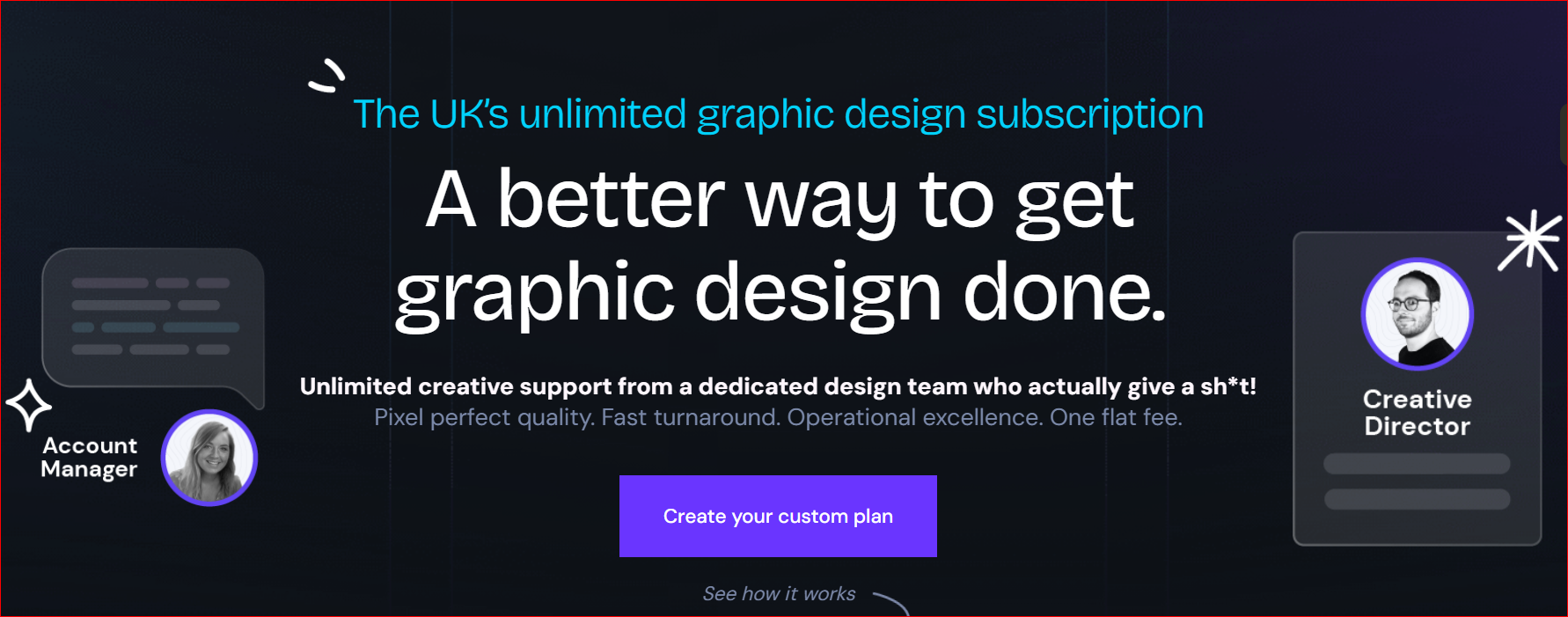
Service: Unlimited graphic design subscription for UK marketing and design teams, covering everything from social and ad creative to print, presentations, and video editing.
Fixed Deliverable: A dedicated designer, account manager, and creative director who take unlimited design requests and revisions through a collaborative dashboard, with turnaround starting from 12 hours.
Pricing Tier: Flat monthly subscription plans starting from £950/month (with a £995 first-month trial offer), scaled to daily design capacity needed.
Landing Page Execution: Runs a direct "Us vs. In-house vs. Freelance vs. Agency" comparison table with average monthly costs, positioning the flat fee against the unpredictability of hiring.

Service: Unlimited video editing requests and revisions for content creators, businesses, and agencies.
Fixed Deliverable: A dedicated account manager and editor deliver a first draft in 1–3 business days, with 1-day revision turnaround, tracked through a personal project dashboard.
Pricing Tier: Tiered monthly packages: Eskimo $849/month, Siberian $1,590/month, and St. Bernard (white-label/agency) $2,749/month, plus pay-as-you-go credit bundles.
Landing Page Execution: Uses a direct question-and-answer format ("How unlimited is unlimited?", "Can you help me beat my deadlines?") and a simple 3-step process graphic to remove doubt about the unlimited model.

Service: On-demand virtual assistants for admin support, customer support, social media/content assistance, and prospecting/outreach.
Fixed Deliverable: A vetted, trained VA matched to the client within a day, working 10–40 hours/week with unused hours rolling into the next month.
Pricing Tier: Flat hourly rate by tier: Basic Roles $10/hr, Mid-Level $13/hr, High-Level $15/hr.
Landing Page Execution: It sells the outcome ("no hiring headaches," free replacement if unsatisfied) with three tiers so buyers self-select without needing a custom quote.
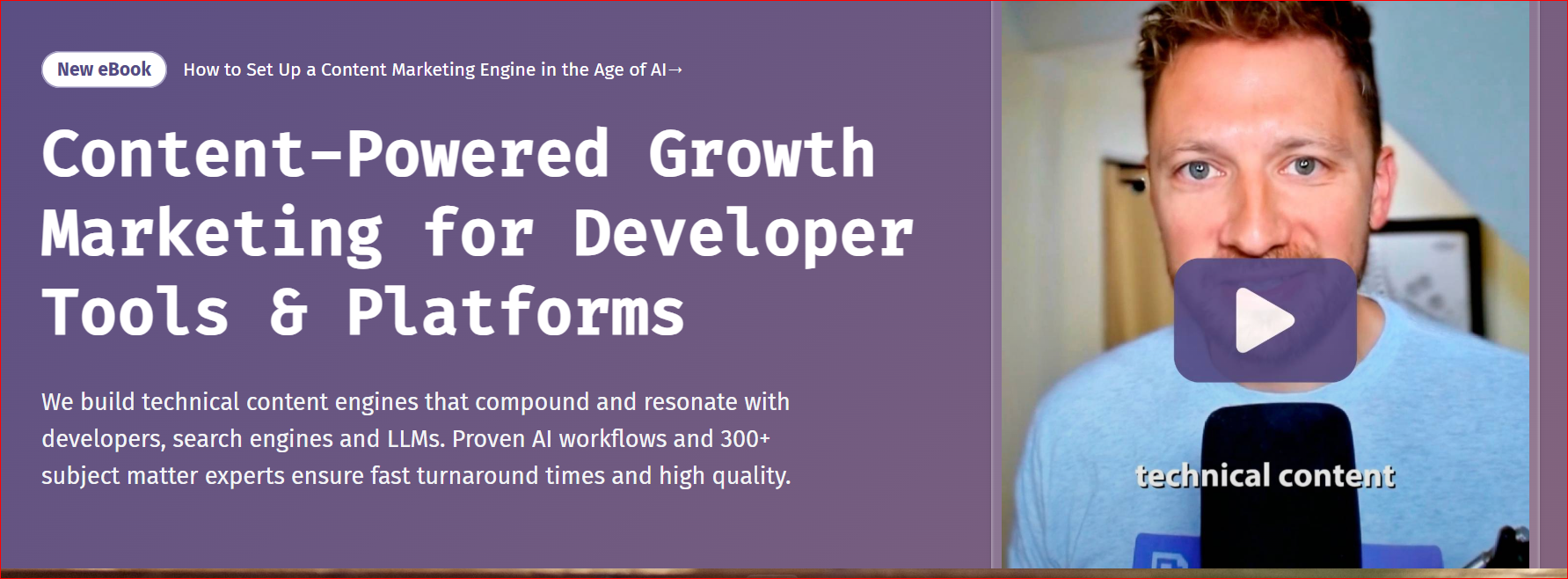
Service: Technical content and developer-focused blog posts written by software engineers.
Fixed Deliverable: 2 to 4 technical, code-heavy articles per month designed specifically to target software developers.
Pricing Tier: Flat project pricing, typically starting at $1,000 to $1,500 per article.
Landing Page Execution: It positions the agency specifically around the difficulty of writing for technical audiences, framing their vetted engineering writers as the core competitive advantage.
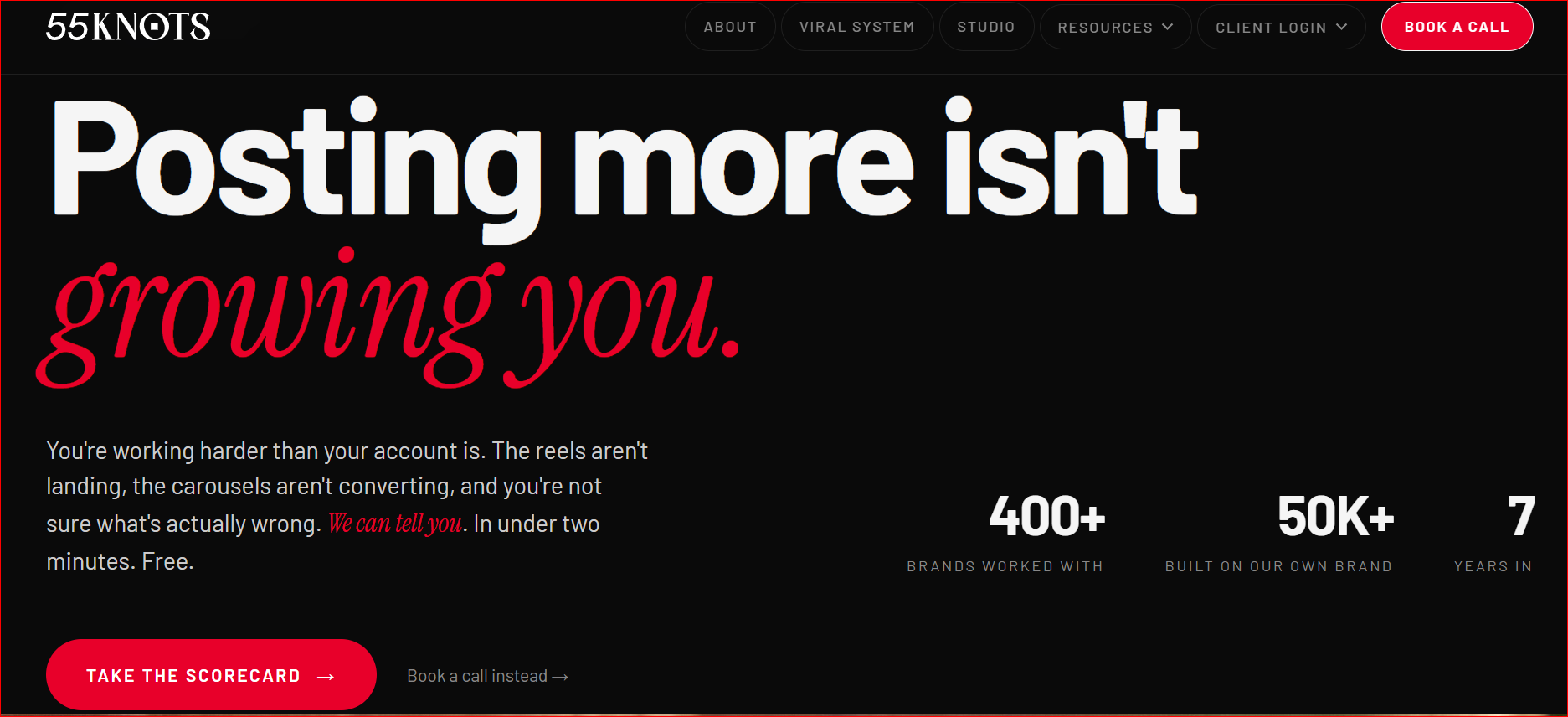
Service: Done-for-you short-form social content (reels and carousels) for brands, planned and produced by an in-house studio team.
Fixed Deliverable: Tiered monthly content volume (12, 20, or a fully strategist-planned 20 pieces per month) filmed, edited, and delivered on a weekly cadence for client approval.
Pricing Tier: Starter $797 AUD/month, Growth $1,197 AUD/month, and a top "Most Strategic" tier from $2,697 AUD/month; single pieces also available at $150 AUD each.
Landing Page Execution: It uses a free 2-minute interactive "Social Scorecard" diagnostic to qualify and hook visitors before presenting the tiered packages, and points to its own 50K-follower brand as proof of results.

Service: Affordable, done-for-you social media marketing.
Fixed Deliverable: A fixed number of custom graphics, captions, and hashtag research per month (e.g., 12 posts/month on the entry plan), run through onboarding, a Slack channel, and a content approval system before scheduling.
Pricing Tier: Tiered monthly packages based on post volume (exact pricing available on request on their site).
Landing Page Execution: It walks visitors through the production pipeline step by step, making the process feel transparent and low-effort for the client.
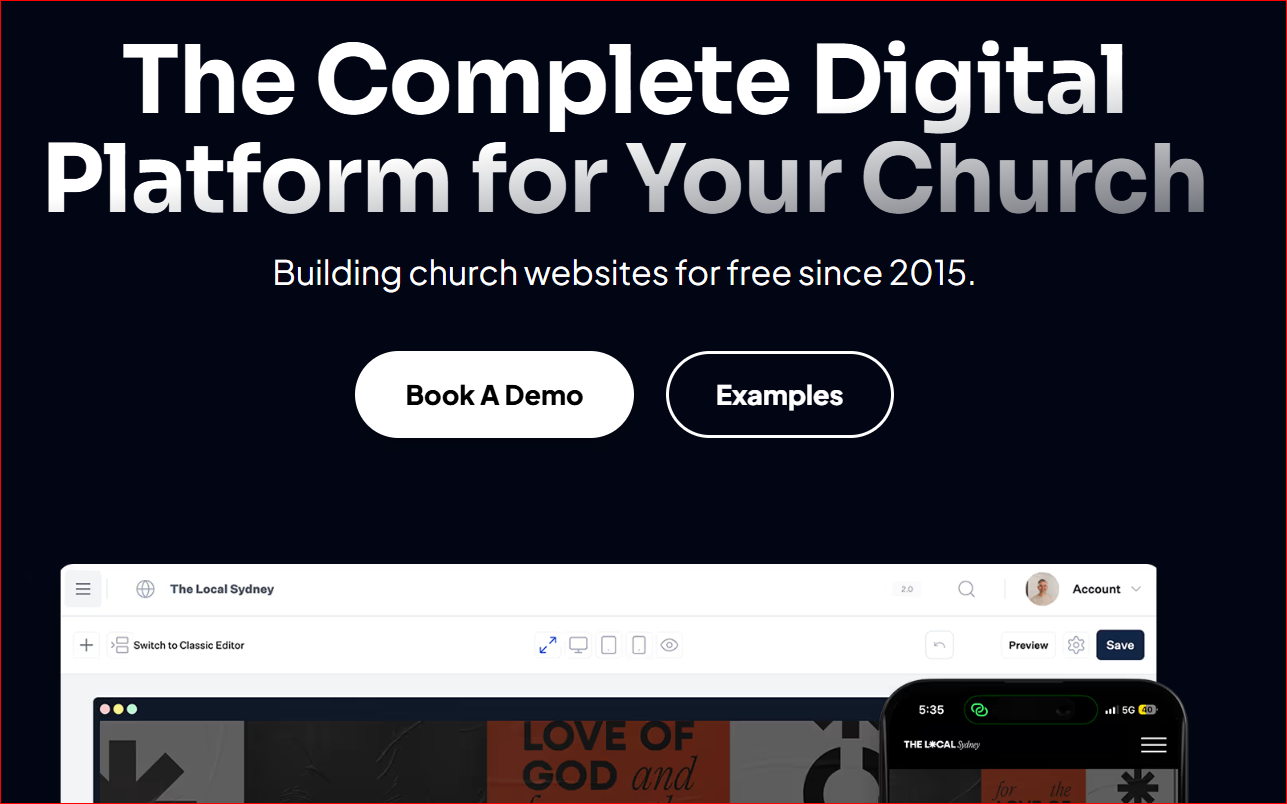
Service: A done-for-you website platform and "complete digital platform" built specifically for churches: website, mobile app, sermon hosting, online giving, and small groups.
Fixed Deliverable: A fully built, branded church website included free with every subscription, plus ongoing platform features (events engine, members portal, livestreaming) and integrations with Planning Center, PushPay, and ChurchSuite.
Pricing Tier: Monthly plans starting at $29/month, with a 14-day free trial.
Landing Page Execution: It niches down on one audience (denomination-specific pages for Baptist, Catholic, Methodist, etc.) and uses dozens of real customer testimonials to build trust.
If productizing your service makes sense for your business, start small. Pick one service you already deliver, define exactly what is included, set a fixed price, and document the process from intake to delivery.
Then test the offer with real clients before building a larger system around it.
If you want to go deeper, read our Productized Service Guide for the full playbook on building, pricing, and scaling a productized service.
And when you are ready to run the day-to-day delivery, ManyRequests gives productized agencies a structured place to manage client requests, intake, workflows, and delivery.
A retainer is not necessarily the same thing as a productized service. A traditional retainer often gives a client access to a set number of hours or a general pool of services each month. A productized retainer defines the exact output or outcome the client receives on a recurring basis, such as four SEO articles every 30 days for $2,000 per month.
Productized services can work for complex B2B offerings when you package a specific part of the engagement rather than trying to standardize everything. For example, a consultant could offer a fixed-price technical audit or strategy workshop before moving a client into a larger custom engagement.
You can scale a productized service without building a massive team. A documented delivery process, automation, and client portals can help a small team handle more clients consistently. You can also bring in specialized contractors for parts of the delivery process as demand grows.
If a client asks for an add-on outside the scope, you can offer it separately as a custom service or paid add-on. Clear scope boundaries make this easier because both sides already know what the standard package includes. You can simply explain that the request is outside the package and provide a separate price if you are able to do the work.
1. See how ManyRequests works in real life. Start a free trial and experience how productized agencies centralize requests, reduce chaos, and streamline delivery, without changing their entire workflow.
2. Read our Implementation Guide to launch smoothly with your team and clients.
3. Follow us on LinkedIn and YouTube for practical agency growth strategies
4. Check out The Productize Blueprint to learn how to turn your services into a scalable, productized offer.
William Nzewi is a data scientist and a writer. He likes to read and learn new things, especially about tech, business and life.